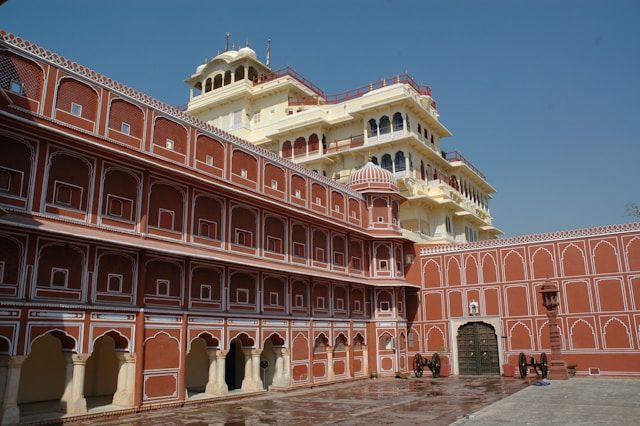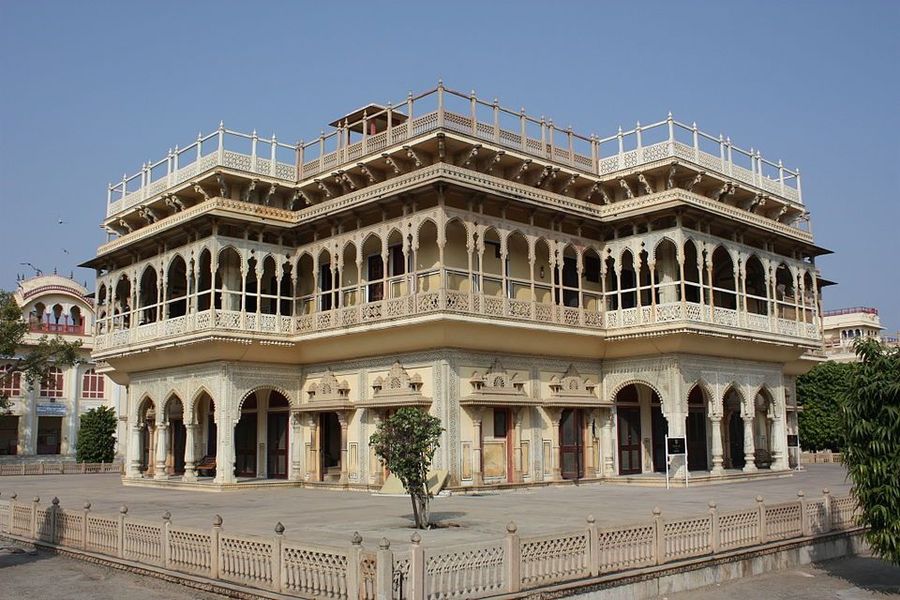
The City Palace is a magnificent complex that occupies nearly one-seventh of the old walled city, blending Rajasthani and Mughal architecture in a series of courtyards, gardens, and buildings. Built between 1729 and 1732 by Maharaja Sawai Jai Singh II, it remains the residence of Jaipur's royal family — the Maharaja still occupies a private section. The Mubarak Mahal (Welcome Palace) houses a textile museum with royal garments, the Pritam Niwas Chowk features four stunning seasonal doorways, and the Diwan-i-Khas holds two massive silver urns — the world's largest silver objects — used to carry Ganges water to London.

What makes this place special

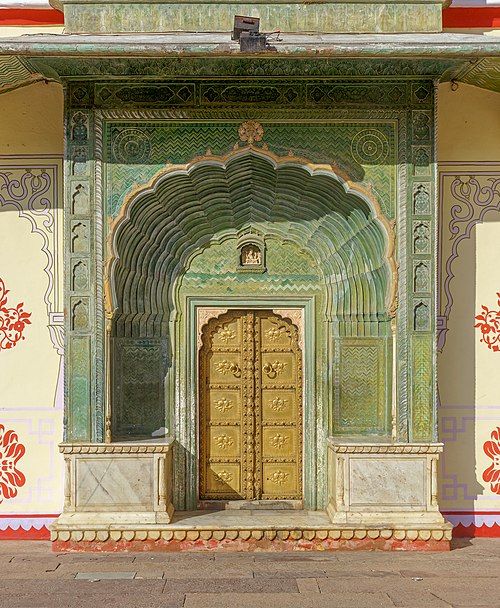
Four exquisitely decorated doorways representing the four seasons — peacock (autumn), lotus (summer), green (spring), and rose (winter) — surrounding a courtyard of breathtaking beauty.

Join the discussion with real travelers. Ask questions, share insights, and get the most out of your next adventure.
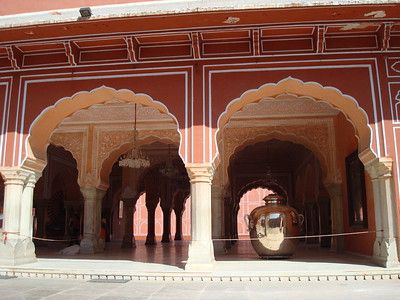
Two massive sterling silver urns, each 1.6 meters tall and holding 4,091 liters — the world's largest silver objects, made to carry sacred Ganges water for a king's voyage to England.

A collection of royal garments including an enormous attar (robe) belonging to the famously large Maharaja Sawai Madho Singh I, along with Pashmina shawls, Sanganeri prints, and ceremonial robes.