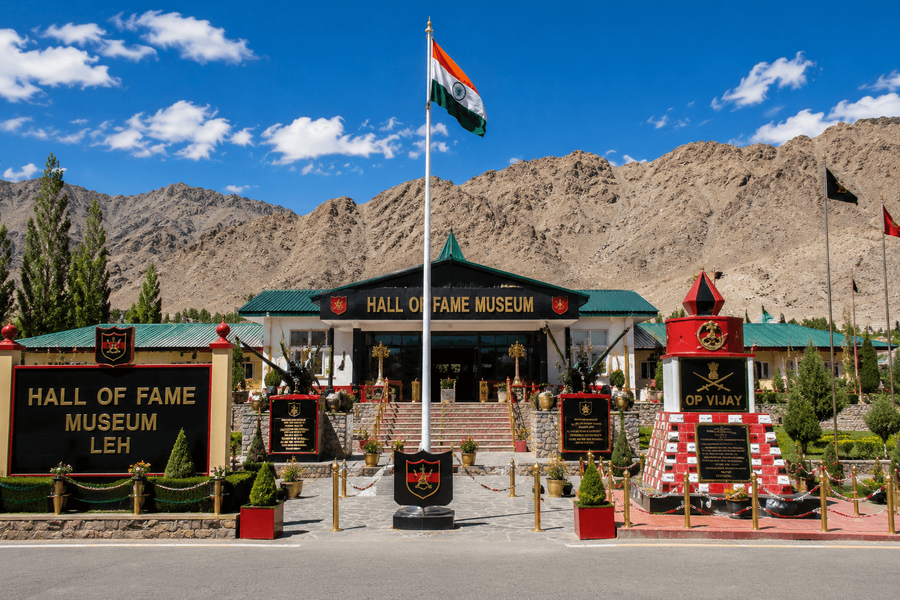
The Hall of Fame Museum in Leh is one of the most meaningful places to visit in Ladakh. Built and maintained by the Indian Army, the museum stands as a tribute to the soldiers who have served and sacrificed their lives in some of the world's most challenging terrains. More than just a museum, it offers visitors a deeper understanding of Ladakh's strategic importance, military history, culture, and the extraordinary conditions faced by soldiers stationed in the region.
Located just a few kilometers from Leh town, the museum is among the most visited attractions in Ladakh. As you walk through its galleries, you'll encounter photographs, battle records, personal belongings of soldiers, weapons, uniforms, and detailed exhibits documenting military operations in high-altitude areas such as the Siachen Glacier and Kargil sector.
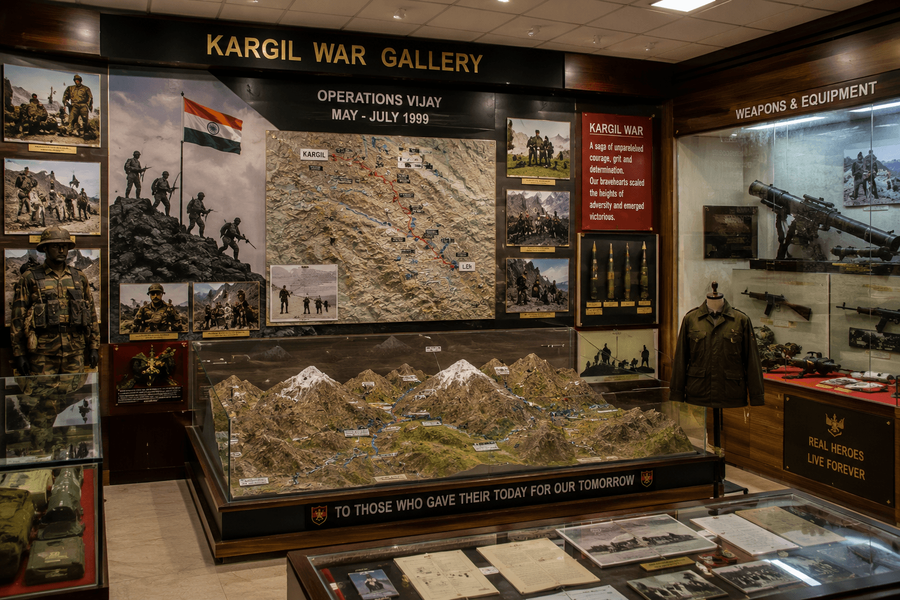
One of the most moving sections is dedicated to the Kargil War, where visitors can learn about the bravery, sacrifices, and stories of soldiers who defended the country's borders. Letters written by soldiers, recovered equipment, and memorial displays provide a powerful and emotional experience.
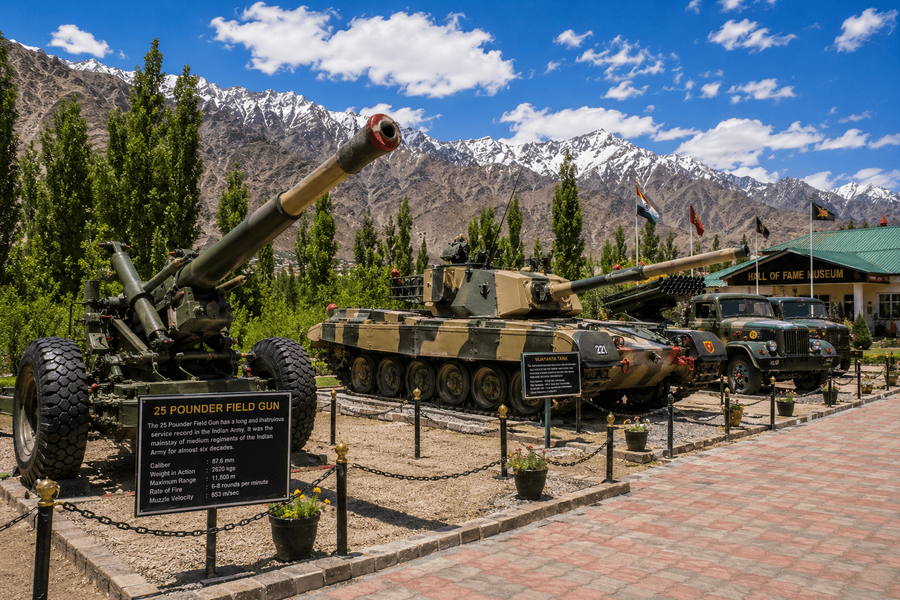
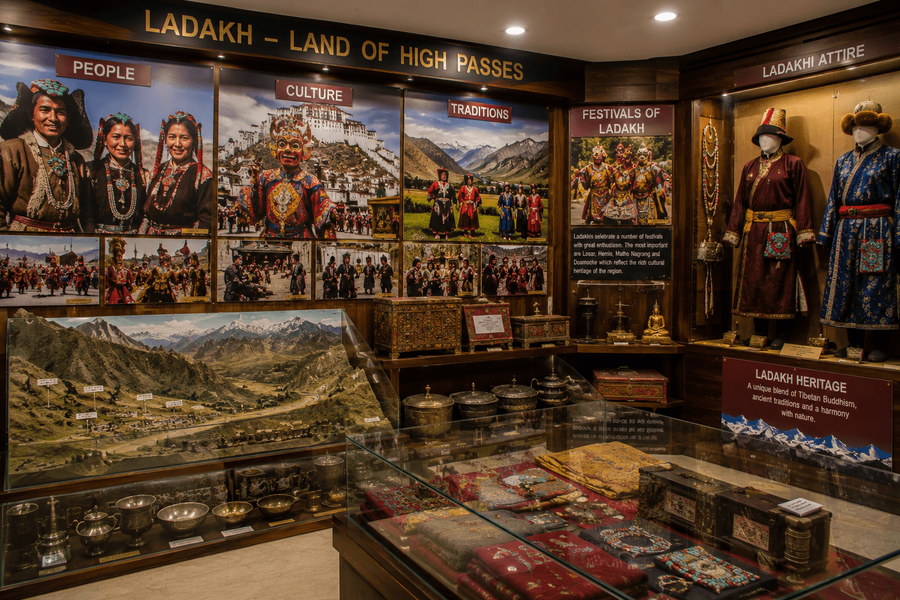
The museum also showcases Ladakh's culture, traditions, wildlife, geography, and local way of life, making it an excellent introduction to the region. Outside the museum, military equipment, artillery displays, and memorial installations further highlight the role of the armed forces in protecting the Himalayas.
For many travelers, a visit to the Hall of Fame becomes one of the most memorable experiences in Ladakh, offering both inspiration and perspective beyond the region's stunning landscapes.
Highlights
What makes this place special
01
Kargil War Gallery
Historic exhibits, battle maps, photographs, uniforms, and memorabilia from the Kargil War.
02
Things to Know
Tips for your visit
•Built and maintained by the Indian Army as a tribute to soldiers who have served in Ladakh and along India's northern borders.
•Typical visiting hours are around 9:00 AM to 7:00 PM, though timings may vary seasonally.
•Entry fee is generally between ₹25 and ₹50 per person.
•Photography is allowed in most outdoor sections, though restrictions may apply inside certain galleries.
•Features a dedicated Kargil War Gallery showcasing photographs, maps, battle accounts, and stories from the 1999 conflict.
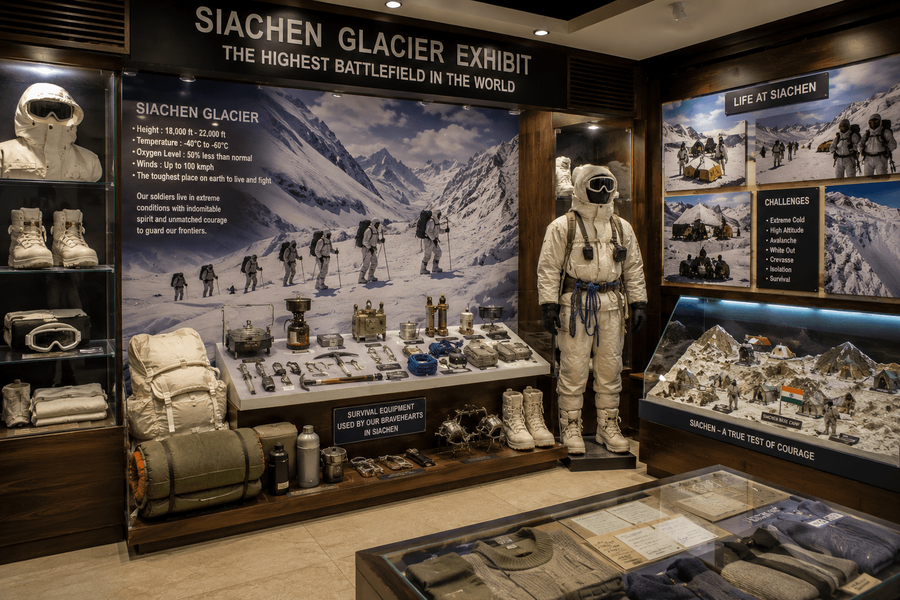
•Contains exhibits highlighting life at the Siachen Glacier, the world's highest battlefield.
•Displays specialized high-altitude survival equipment, uniforms, and gear used by soldiers in extreme Himalayan conditions.
•Houses personal belongings, letters, medals, and stories of soldiers who served in Ladakh and the Kargil sector.
•
Places to stay in Leh-Ladakh
Neomaxer on the go
Download the Neomaxer App
Your travel companion, now in your pocket.
Scan to download
Siachen Glacier Exhibit
Displays showcasing extreme-weather gear, survival equipment, and life at the world's highest battlefield.
03
Military Equipment Display
Outdoor display of tanks, artillery guns, military vehicles, and equipment against the Himalayan landscape.
04
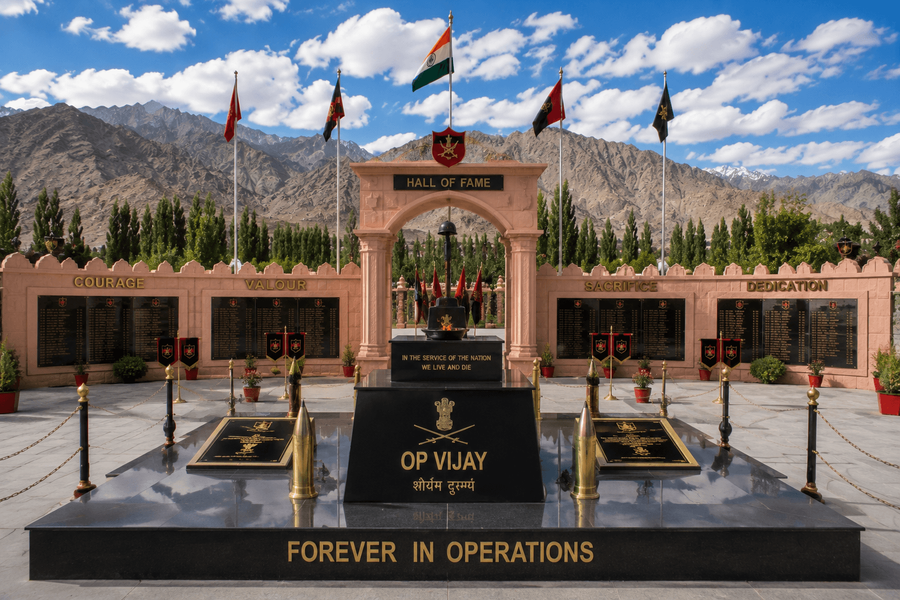
War Memorial and Tribute Zone
A respectful memorial area honoring soldiers with engraved names, flags, and commemorative installations.
05
Ladakh Heritage and Culture Gallery
Traditional Ladakhi costumes, cultural exhibits, artifacts, and displays showcasing the region's heritage.
The outdoor display area features tanks, artillery guns, military vehicles, and battlefield equipment.
•Includes a well-maintained war memorial dedicated to soldiers who sacrificed their lives in defense of the nation.
•Visitors can learn about the logistical challenges of operating in Ladakh's harsh terrain and extreme weather conditions.
•The museum also contains sections dedicated to Ladakhi culture, wildlife, traditions, festivals, and local communities.
•Informative audiovisual presentations are often shown during operating hours.
•Many exhibits provide insights into the strategic importance of the Indus Valley, Siachen Glacier, and the Kargil region.
•The memorial section is considered one of the most emotional and impactful parts of the museum.
•Early morning and late afternoon visits are generally less crowded.
•The museum remains accessible throughout most of the tourist season from May to October.
•Located on relatively flat terrain, making it easier to visit compared to many hilltop monasteries.
•A souvenir shop is available where visitors can purchase military-themed memorabilia and local handicrafts.