
Why Chettinad Mansions Still Feel Lived-In, Not Preserved
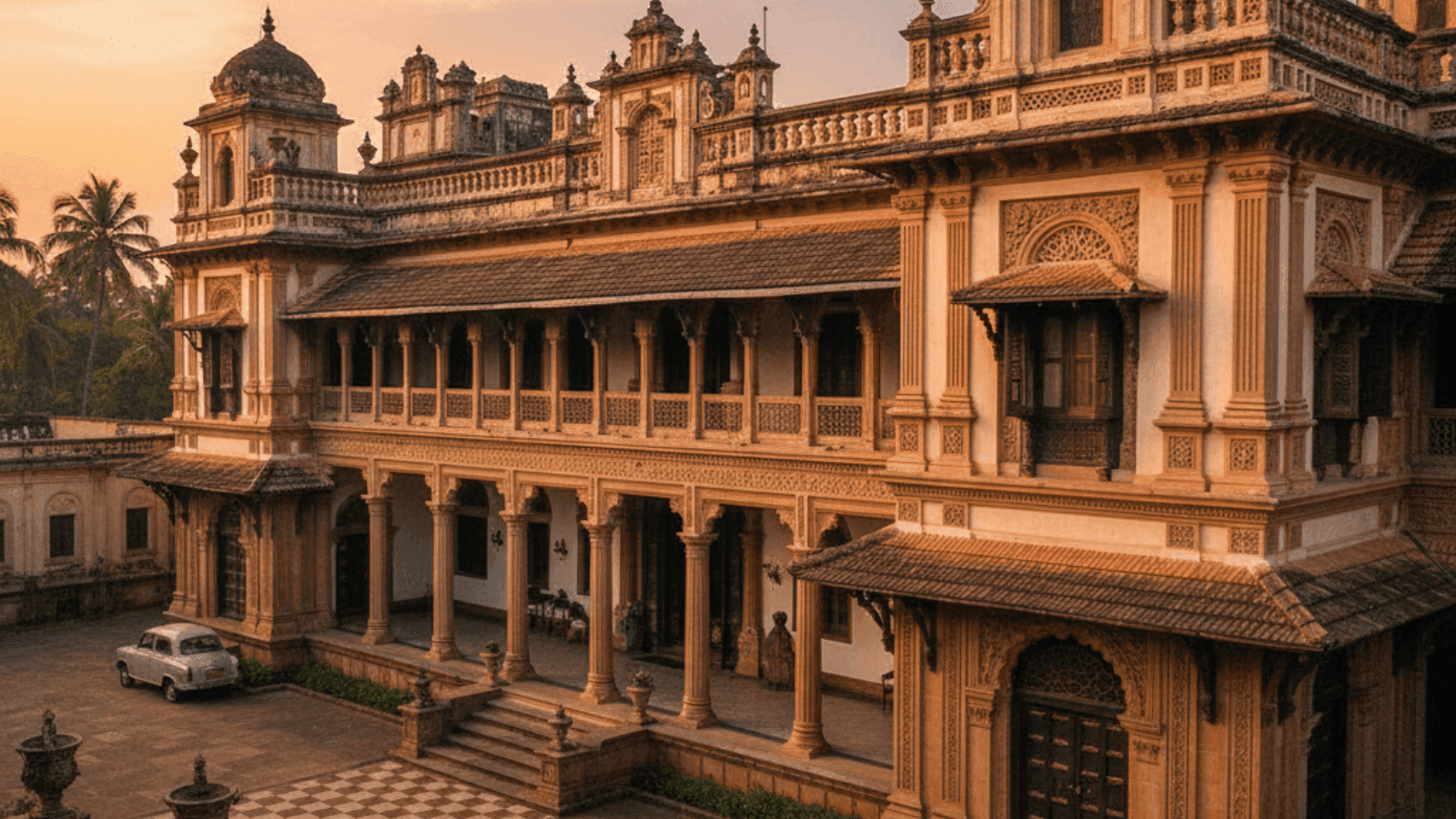
Chettinad mansions were built to be seen from the street first - long façades, heavy doors, and proportions that quietly announce wealth without ornament shouting for attention.
What Makes a Chettinad Mansion Architecturally Distinct
A Chettinad mansion is organised like a slow reveal. You move from public to private spaces through a sequence of thresholds rather than corridors.
Chettinad sits in southern Tamil Nadu, spread across around 75 villages in Sivaganga and Pudukkottai districts, with Karaikudi acting as the informal centre. The region does not have fertile river plains or lush landscapes, which makes the architectural excess feel almost defiant.
Most houses follow a linear plan with multiple courtyards - sometimes two, sometimes three - each serving light, ventilation, and social hierarchy. Front courtyards handled guests and ceremonies. Inner courtyards belonged to family life.
Imported materials sit comfortably next to local techniques. Burmese teak doors, Italian marble floors, Belgian glass, and English ceramic tiles were shipped home and reassembled by Tamil craftsmen. The proportions stayed regional even when the materials travelled far.
The Courtyard as the Core
Courtyards were not decorative pauses. They controlled temperature, drained monsoon rain, and structured daily routines. Morning prayers, afternoon rest, and evening gatherings all revolved around these open squares.
The houses breathe differently because of them. Even in peak summer, shaded corridors and open courtyards keep interiors cooler than expected.
Craft Over Ornament
Walls often look restrained until you notice the detail up close. Egg-white plaster finishes, hand-painted ceilings, carved columns, and lime-based floors reveal themselves slowly.
Nothing feels rushed. These houses were built over years, sometimes decades, with materials sourced gradually as trade routes allowed.

Why These Mansions Feel Like Living History
Time never left these houses; it just learned to coexist. Some mansions are museums now, but many remain lived in, with plastic chairs sitting under century-old chandeliers and steel cupboards placed against hand-painted walls. Daily life did not stop for preservation.
Family photographs, fading calendars, locked rooms, and unused wings tell stories of migration, shrinking households, and changing priorities more honestly than plaques ever could.
Significance Beyond Architecture for Travellers
Chettinad mansions explain how globalisation worked before airports and email. They show how wealth circulated outward and returned home instead of settling where it was earned. They also show how status was tied to land, lineage, and ritual rather than mobility.
For travellers, the value lies in understanding that these are not ruins. They are records of choices - what was kept, what was abandoned, and what still matters.
Best Months to Visit Chettinad
- November to February offers manageable heat and quieter villages after the festival season settles. Morning walks through Karaikudi or Kanadukathan are genuinely pleasant during this period.
- March to May is harsh but revealing. Empty streets, locked doors, and slow afternoons make the scale of these mansions feel heavier and more introspective.
Things to Keep in Mind While Visiting
- Many mansions are private homes, not tourist sites. Entry usually depends on permission, timing, and local introductions rather than fixed visiting hours.
- Footwear etiquette matters. Shoes are often removed even in semi-public areas, and photography may be restricted indoors.
Food Habits in Mansion Life
Chettinad cuisine grew alongside these houses, designed for large families and frequent guests. Meals were structured, timed, and generous.
Spice-heavy gravies, sun-dried vegetables, and rice-based dishes suited long storage and big kitchens. Separate cooking areas kept heat away from living spaces, another reason food and architecture evolved together here.
Eating in a mansion dining hall, seated on the floor, changes how the food tastes. The scale and setting slow you down.
The Present Condition of Chettinad Mansions
Many houses are locked, not abandoned. Owners live in cities or abroad and return only for weddings or festivals. Maintenance becomes expensive when roofs leak and courtyards crumble.
Some mansions have been restored into heritage stays, while others wait in limbo, structurally sound but emotionally paused. The contrast between restored and untouched houses can exist on the same street.
How to Experience Them Respectfully
Stay in a heritage mansion rather than rushing through multiple properties. One house, explored slowly, teaches more than ten viewed briefly.
Talk to caretakers. They often know family histories, renovation decisions, and the quiet compromises behind preservation. These conversations fill gaps that guidebooks leave open. Notice the silence in unused wings, the locked doors inside locked doors, and the rooms built for people who never returned.
If staying inside a Chettinad mansion feels more meaningful than just walking through one, Neomaxer makes that possible with heritage stays that still follow the old rhythm of the house.









