
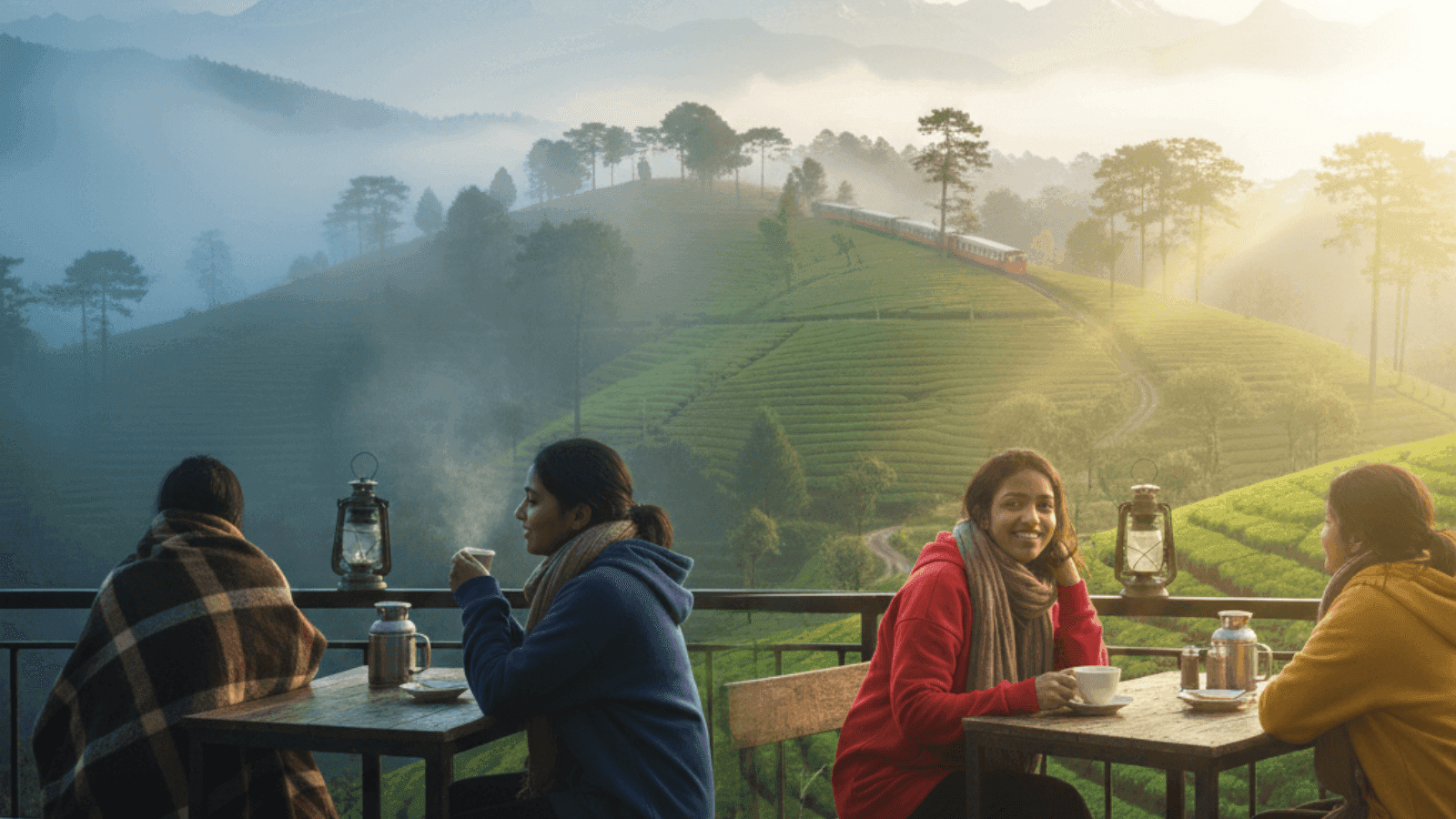
What to Wear in Darjeeling for Cold Mornings
Darjeeling has a habit of making you change clothes before lunch. One minute you are hugging your hoodie with a hot cup of tea, the next you are rolling up sleeves under a bright hill sun. Dressing right here is less about fashion and more about keeping pace with the day.
Why Darjeeling Feels Cold at 7 AM and Mild by Noon
Darjeeling sits at around 2,000 metres above sea level, which creates sharp temperature swings within the same day. Early mornings carry cold mountain air rolling down from higher ridges, while sunlight warms the slopes quickly once the fog lifts. This is why a single outfit rarely works from breakfast to sunset.
Tea garden walks, toy train rides, and open cafés expose you to wind and shade, making layers more practical than heavy winterwear worn all day.
Layering Is the Only System That Works Here
Base layers for walking and sightseeing
Light cotton or moisture-wicking T-shirts work well during late mornings and early afternoons. Even in peak summer, Darjeeling afternoons rarely feel hot enough for sleeveless clothing. Long-sleeve tees help protect against sun and wind without overheating.
Avoid thick fabrics close to the skin. Once you start climbing stairs or walking uphill roads, heavy materials trap warmth quickly.
Mid-layers for changing temperatures
A fleece jacket, light wool sweater, or hoodie is the most-used item in Darjeeling. Locals often carry one folded over the arm, pulling it on and off through the day. This layer handles chilly mornings, cloudy spells, and evening strolls on Mall Road. For travelers visiting between October and March, a thin insulated jacket works better than bulky coats during daylight hours.
Outer layers for wind and mist
Windcheaters and light down jackets matter more than people expect. Darjeeling’s cold often comes from wind rather than extreme low temperatures. A compact outer layer blocks the breeze during Tiger Hill mornings, ropeway rides, and ridge walks. During monsoon months, this outer layer must be waterproof rather than warm.

What to Wear During Cold Mornings
Mornings can drop to single digits in winter and feel damp even in summer. Thermal innerwear is useful from December to February, especially if you step out before sunrise. Woollen socks, closed shoes, and a light scarf make a noticeable difference.
Caps and beanies help retain warmth better than layering multiple sweaters. Locals rely on headwear more than heavy jackets.
Tiger Hill and sunrise trips
Sunrise viewpoints demand extra warmth regardless of season. Standing still in the open wind feels colder than walking around town. A padded jacket, gloves, and muffler are practical here, even in May or June.
Dressing for Comfortable Afternoons
By late morning, Darjeeling feels mild and breathable. Jeans, chinos, or trekking trousers paired with a T-shirt and light layer work across seasons. Dresses and skirts are comfortable in summer when paired with leggings or tights.
Afternoons are ideal for tea estate visits, monasteries, and café hopping, where indoor warmth balances outdoor chill.
High-altitude sunlight can be sharp. Sunglasses, sunscreen, and hats help during long walks, especially on clear days after the monsoon.
Monsoon Dressing Without Discomfort
Rain-friendly clothing choices
From July to September, rain arrives suddenly and lingers. Waterproof jackets with hoods are more practical than umbrellas on steep roads. Quick-dry trousers prevent discomfort when caught in light showers.
Avoid denim during monsoon. It stays damp for hours and feels cold against the skin.
Footwear that handles wet roads
Darjeeling roads turn slippery during rains. Waterproof sneakers, trekking shoes, or sturdy sandals with grip work better than smooth-soled shoes. Carrying an extra pair of socks helps after unexpected showers.
Footwear That Matches Darjeeling Streets
Steep slopes, uneven pavements, and long walks define Darjeeling. Comfortable sneakers or trekking shoes are ideal for daily use. Flip-flops are best reserved for hotel rooms or short errands. Warm socks are underrated here, especially during winter mornings and rainy days.
Accessories That Make a Real Difference
Scarves serve multiple purposes, from warmth to wind protection. Gloves help during early morning outings and winter evenings. Small backpacks allow you to carry layers without hassle as temperatures shift.
A compact umbrella is useful year-round, even outside monsoon months.
Seasonal Clothing Snapshot for Travelers
March to June
Light layers, hoodies, windcheaters, sneakers, and sun protection handle most days comfortably.
July to September
Waterproof jackets, quick-dry clothing, sturdy footwear, and extra socks keep you moving during rain-heavy weeks.
October to November
Fleeces, sweaters, light jackets, scarves, and closed shoes suit crisp air and clear skies.
December to February
Thermals, woollens, padded jackets, gloves, caps, and warm socks cover cold mornings and evenings.
Dressing for Local Experiences
Tea garden walks feel cooler than town streets due to open fields and wind. Ropeway rides expose you to altitude and breeze. Evening cafés cool quickly once the sun dips behind the hills. Locals dress in layers not for style, but because Darjeeling teaches you early that the day never feels the same twice.
If you want your Darjeeling stay to feel as comfortable as your perfectly layered outfit, Neomaxer curates stays that match the rhythm of the hills. From cozy mornings to relaxed evenings, Neomaxer helps you settle in exactly where Darjeeling feels best.









