
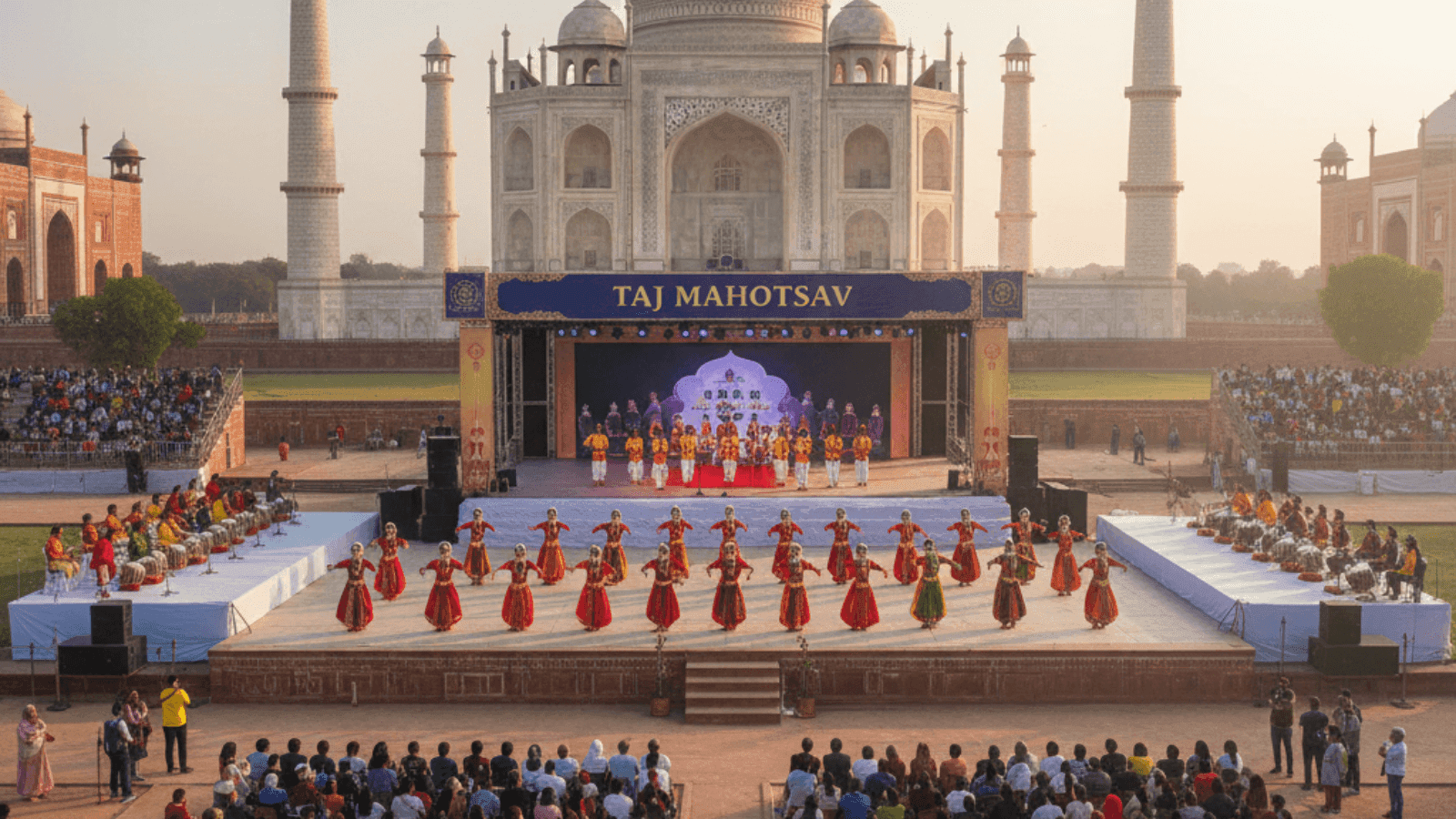
Visiting Agra During Taj Mahotsav Changes What You Notice First
What actually happens during Taj Mahotsav
The festival is held every year for ten days, usually between February 18 and February 27, at Shilpgram, which sits less than a kilometer from the Taj Mahal’s eastern gate. It runs daily from 10:00 AM to 10:00 PM. What fills those hours is not just performance but process.
- Artisans from across India build temporary stalls and work on their crafts in real time
- Folk musicians and dancers perform on open stages throughout the day and evening
- Regional food vendors prepare traditional dishes from their states
- Visitors can watch crafts being made, not just buy finished products
- Cultural performances intensify after sunset with larger crowds and longer shows
- The layout encourages slow walking, browsing, and conversation with makers
Dates, location, and daily flow
The festival takes place annually at Shilpgram, a purpose built crafts village designed to resemble rural Indian architecture. Mud style huts, thatched roofs, and open courtyards create a setting that matches the crafts being displayed.
Morning hours are quieter. Artisans set up their spaces, begin demonstrations, and speak more freely with visitors. By afternoon, tour groups and domestic travelers arrive. Evenings bring the largest crowds, drawn by live music, dance, and food.
Entry fees are modest. Indian visitors typically pay around ₹50, while foreign tourists pay a higher fee, usually around ₹500. Children under a certain age often enter free.

Art and crafts you can see being made
The most distinctive part of Taj Mahotsav is watching objects come into existence. Many of the crafts are historically connected to Agra itself.
Marble inlay work appears everywhere. Artisans cut tiny pieces of semi precious stones and fit them into marble surfaces, using the same techniques that decorate the Taj Mahal. Watching the precision involved makes the monument feel less distant and more human.
You also see:
Zardozi embroidery
Gold and silver threads are stitched into fabric with slow, deliberate movements. This form of embroidery flourished during the Mughal era and still survives in cities like Agra, Lucknow, and Varanasi.
Pottery and terracotta
Clay is shaped on spinning wheels, dried, and painted. Some artisans fire their work on site in small kilns.
Handloom textiles
Weavers operate wooden looms manually, producing shawls, scarves, and fabric using techniques passed down through generations.
Metal and wood crafts
Hammered brass items, carved wooden boxes, and hand forged tools fill entire sections of the festival. Nothing feels mass produced. Even similar items carry small variations.
Cultural performances that change the atmosphere
A central stage hosts scheduled performances from morning until late evening. These are not shortened tourist versions but full traditional presentations.
You might see classical Kathak dance, which originated in northern India and was influenced by Mughal courts. The dancers use precise footwork, spinning movements, and expressive gestures.
Folk performances vary daily. Groups from Rajasthan, Punjab, Assam, and other states perform regional dances that reflect local traditions. Each group brings its own music, costumes, and storytelling style.
Regional food becomes part of the experience Food stalls are arranged throughout the festival, and many specialize in regional dishes that are difficult to find elsewhere in one place.
You find Mughlai dishes that reflect Agra’s culinary history, including kebabs, biryani, and rich gravies. Nearby stalls serve sweets like jalebi and petha, which is Agra’s most famous confection made from ash gourd.
Other states bring their own flavors. Rajasthani dal baati, Bengali sweets, Kashmiri tea, and South Indian snacks appear side by side.
Details travelers should know
- The festival runs for ten days every year, typically from February 18 to February 27
- Timings are 10:00 AM to 10:00 PM daily
- Location is Shilpgram, near the Taj Mahal eastern gate
- Entry tickets are available at the venue
- Evenings are the busiest time, especially on weekends
- Comfortable walking shoes help since the entire area is explored on foot
- Cash is useful because many stalls do not accept digital payments
The festival aligns well with winter travel in North India. February weather in Agra is mild, usually between 10°C and 25°C, making long walks comfortable.
The Taj Mahal itself remains visible in the distance, but it becomes background. What stays with you instead is the sound of chisels against stone and the realization that the monument was built by hands that worked exactly like the ones still working here.
If Taj Mahotsav makes you want to stay longer and experience Agra beyond its famous postcard view, where you stay becomes part of the story. Neomaxer helps you find stays that place you closer to culture, crafts, and the lived side of the city.









