
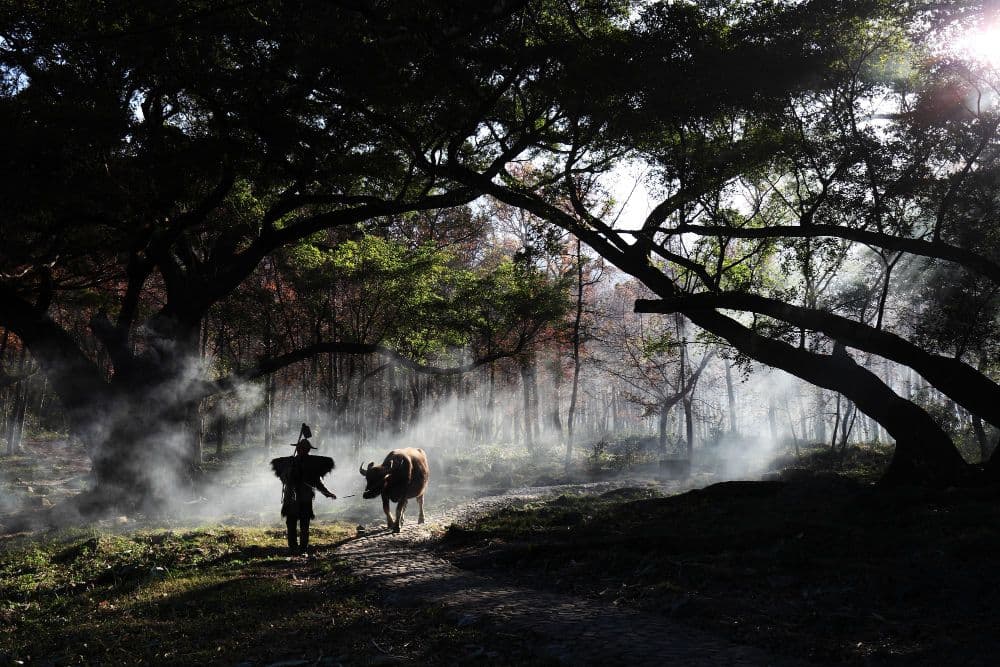
The first bamboo pole on the Mawryngkhang trail hangs over empty air, with mist hiding how far the river falls beneath your feet in Meghalaya.
Where the bamboo trek lives on the map
The trail starts at a place close to Wahkhen. It is a small Khasi village located in the East Khasi Hills district of Meghalaya.
At the bus stand, there is nothing you can see except a narrow path that keeps going down into the green. No big tourist gate there, only some boards painted by hand and a few local guides waiting.
If you ever wondered, “Meghalaya which country?”, it sits in northeast India, and this trail is one of the rawest pieces of Meghalaya tourism.
The nearest big hub is Shillong, the Meghalaya capital and main Meghalaya city, about 2 to 3 hours away by car depending on rain and road work.
Reading the hills before you step on bamboo
Locals do not talk about height first, they talk about the weather.
They look at cloud colour, wind direction, and how loud the river sounds from the village.
You know it is not a good day when:
- Clouds sit low and do not move
- Wind whistles through the bamboo in short, sharp bursts
- The river below is a constant roar instead of a low rush
On days like this, good guides will tell you to wait, or to walk only part of the trail.
Understanding the trail itself
The Mawryngkhang bamboo trek is a stitched line of bamboo bridges, ladders and walkways fixed to rock faces and river boulders that you need to cross.
The path climbs, dips, then clings to cliffs with nothing but bamboo, rope and your own balance between you and the water below. This is why while it is extremely difficult, it is also a thrilling adventure.
Quick facts that matter more than distance numbers:
- Duration: 3 to 5 hours return, depending on fitness and photo stops
- Difficulty: moderate to tough if you fear heights
- Surface: wet bamboo, rock, mud, often all in one stretch
This is not a neat city skywalk; it is a trail built and maintained by villagers who know every bend of the river.
What you carry, what you leave behind
People who live here move light and sure.
Travellers often arrive overpacked and underprepared.
Carry:
- Shoes with real grip, not flat soles
- A light rain jacket, even on “clear” days
- 1 to 2 litres of water and some quick snacks
- A small first aid kit and a dry bag or cover for your phone
Leave behind:
- Heavy backpacks that throw off your balance
- Loud music speakers, they disturb both people and birds
- Plastic bottles and wrappers, this is shared land, not a bin
Local Khasi guides speak the main Meghalaya language of the area, Khasi, but many also manage Hindi and basic English, enough to warn, guide and joke on the way.

Moving through the wild hills
The moment your foot hits that first bamboo, the forest swallows you whole like the road never even existed.
You pick it up quick, moving like the locals: step by shaky step, watching where the next knot's gonna be.
Along the way:
- Slopes of dense forest drop straight to the river
- Spiders hang still in huge webs, waiting out the damp
- Small farm plots and betel nut trees cling to any flattish patch of soil
- The sound of your own breath mixes with cicadas and distant cascades
You are not in a national park with fences, you are in lived-in hills, where people still farm, pray and walk these paths every day.
Best time and weather for the bamboo trek
Meghalaya is mostly known for rain and these bamboo structures get wet with every drop.
- November to March: is generally considered the safest time as weather is clear and paths are firm
- April to June: is warmer and more humid, with possible afternoon storms
- Monsoon peak (roughly June to September): is usually not the best period because bamboo can get extremely slippery and rivers swell
One should always heed the locals' advice, no blog can be as familiar with the trail as a person who has heard the rain on their roof all night.
Fitting the trek into your Meghalaya route
Mostly, tourism in Meghalaya is associated with well, known locations like Cherrapunji, Dawki, and the living root bridges but the bamboo trek is definitely of the same league and one that you should not miss out on.
Wahkhen can be your one day trip, if you stay in Shillong or small hill towns which are located between major Meghalaya tourist spots.
A simple itinerary may be:
Day 1: Get to Shillong, relax and check out the markets Day 2: You can head towards Wahkhen by car, finish the bamboo trek, either return or stay Day 3 onwards: Head to Sohra, Dawki, or visit other waterfalls and root bridge trails
Every district of Meghalaya that you traverse spices up the trip with a different set of cliffs, caves, and villages.
Where to stay so the hills feel close, not far
Being too far from the trailhead means you start late, rush through the trek, and return in the dark on narrow mountain roads, which is quite unsafe.
Staying within reasonable striking distance lets you leave with the first light, walk slowly, and be back with enough time for tea in the village.
Look for homestays and small guesthouses in and around Shillong, Sohra or the mid belt roads that understand trekking timings, offer early breakfasts, and can connect you with trusted local guides, and once you have fixed which corner of Meghalaya you want as your base, it is easier to block the right room in advance by booking your stay via Neomaxer so your focus stays on reading the forest and the bamboo beneath your feet, not on last minute bed hunting in the rain-soaked hills of Meghalaya.









