
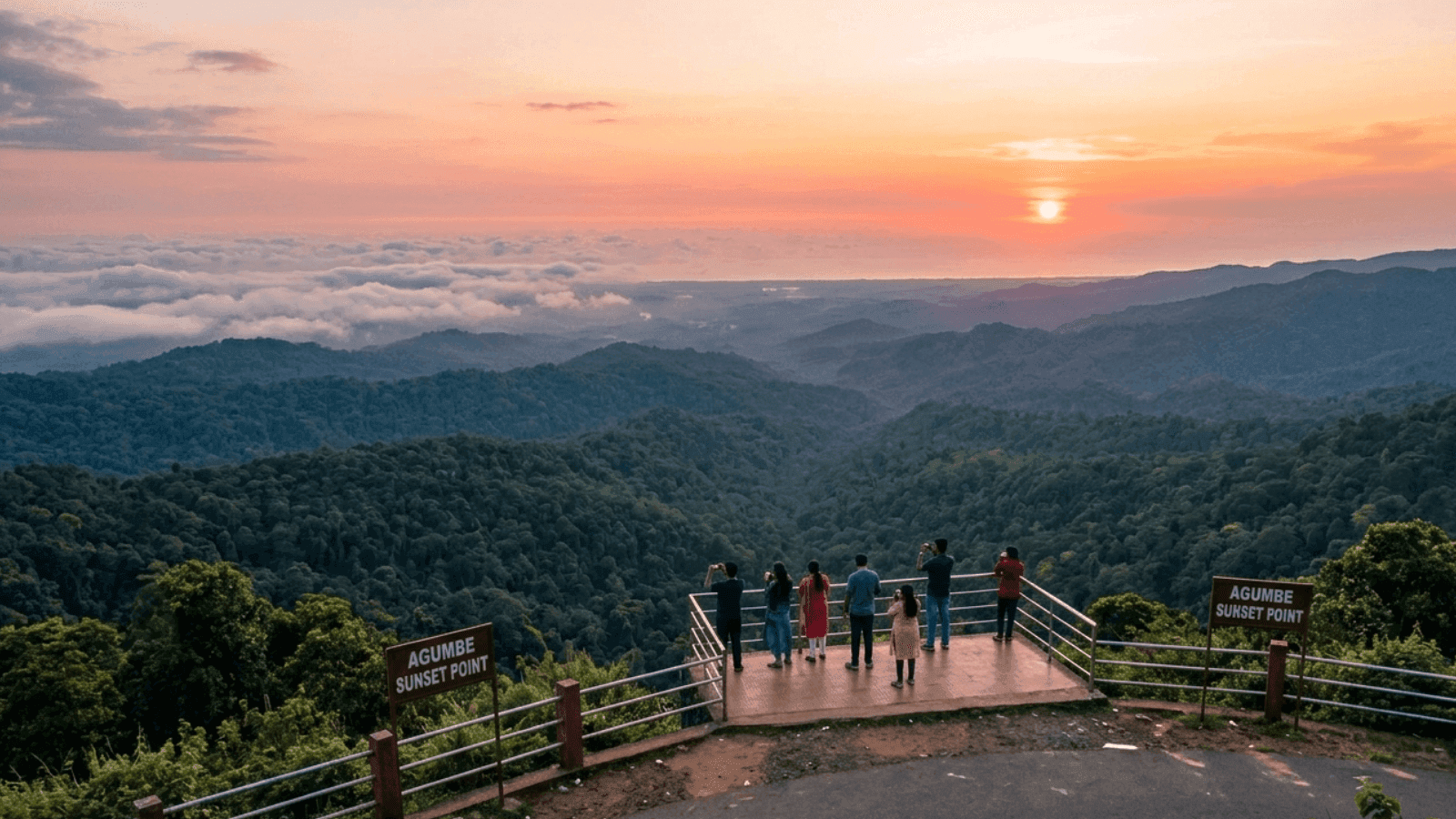
The Sunset Point in Agumbe That Defines Evening in the Rainforest
There are sunsets you watch, and then there are sunsets you wait for. In Agumbe, the waiting is part of the ritual. Chai in hand, valley in front, sky slowly turning theatrical.
Agumbe Sunset Point Drops 600m Over Western Ghats Valley
Agumbe sits on the crest of the Western Ghats in Shivamogga district and is often called the Cherrapunji of the South because of its heavy monsoon rainfall. The sunset point is right on the main road, and the land simply falls away in front of you. On clear days, you can see an endless carpet of rainforest stitched together by ridgelines.
The drop is dramatic but the setting is quiet. Locals gather without fuss. A few plastic chairs appear. Chai stalls do steady business. When the sun begins to dip, conversations slow down on their own.
Kingfisher Trail Reaches Viewpoint in 20 Min Walk
If you want a bit of movement before the show, the short forest paths around the viewpoint are worth exploring. The so-called Kingfisher Trail is an easy 15 to 20 minute walk through damp undergrowth and mossy rocks. The air smells of wet leaves even outside the monsoon months.
You will hear Malabar whistling thrushes before you see them. The trail is not marked in a dramatic way, but local shopkeepers will point you in the right direction if you ask. It is more of a rainforest amble than a trek, and that is exactly why it works before sunset.

Best Months Catch Clear Sunsets
Agumbe is famous for rain, but clear sunsets need a bit of timing. Late February to early May usually brings the clearest skies before the heavy monsoon clouds take over. Once June arrives, thick mist often swallows the valley by late afternoon.
That said, even in the pre-monsoon months, clouds roll in quickly. Some evenings burn orange and pink. Others dissolve into silver fog within minutes. There is no guarantee, and that unpredictability is part of why people keep coming back.
How to Reach Agumbe from Mangalore
Mangalore is the nearest major city with an airport and railway connections. The road to Agumbe climbs through dense forest on State Highway 1, with tight curves and sudden viewpoints that make you slow down anyway.
- KSRTC bus via Udupi: around 4 hours, roughly Rs 250, direct on most days
- Private cab on SH1: close to 3 hours, about Rs 2500 depending on season
- Shimoga overnight train then auto: 5 hours total travel, budget near Rs 200 for the last leg
- Rent a scooter from Udupi: 110 km coastal run, Rs 800 per day
Who's Ready for Rainforest Evening Hikes
By 4 pm, the roadside starts filling up with different kinds of travellers. Photographers arrive early, checking angles and setting up tripods as the light softens over the valley. The curve of distant hills sometimes lines up with drifting clouds in a way that looks almost staged.
Families usually time their visit before dusk, partly to avoid leeches during wet months and partly because the forest gets very dark very quickly. Children chase each other near the wall while elders sit quietly watching the horizon.
Solo trekkers often end up in conversation with local guides at the chai stalls. Someone mentions a hidden waterfall. Someone else talks about night walks in the rainforest. Plans change easily here.
Packing Leech Socks for Wet Trail Slips
Agumbe’s beauty comes with moisture. During and after the monsoon, leeches are common on forest paths. Leech socks, full-length pants, and good grip shoes make a noticeable difference.
The rocks near the viewpoint can also get slippery after rain. It is not a place for rushing toward the edge with a phone in hand. Slow steps, steady footing, and awareness go a long way here.
If you want to time your stay around evenings like this, where the rainforest cools and the sky turns amber, Neomaxer helps you find stays close to Agumbe.









