
Sri Lanka Train Travel That Makes the Journey Matter
Trains in Sri Lanka are not a fallback option when buses feel tiring, they are the reason journeys slow down enough to make sense.
Why Trains Outperform Roads Here
Road travel looks efficient on maps but rarely feels that way on the ground. Short distances stretch into hours once towns, school traffic, livestock, and rain come into play. Trains cut straight through that friction.
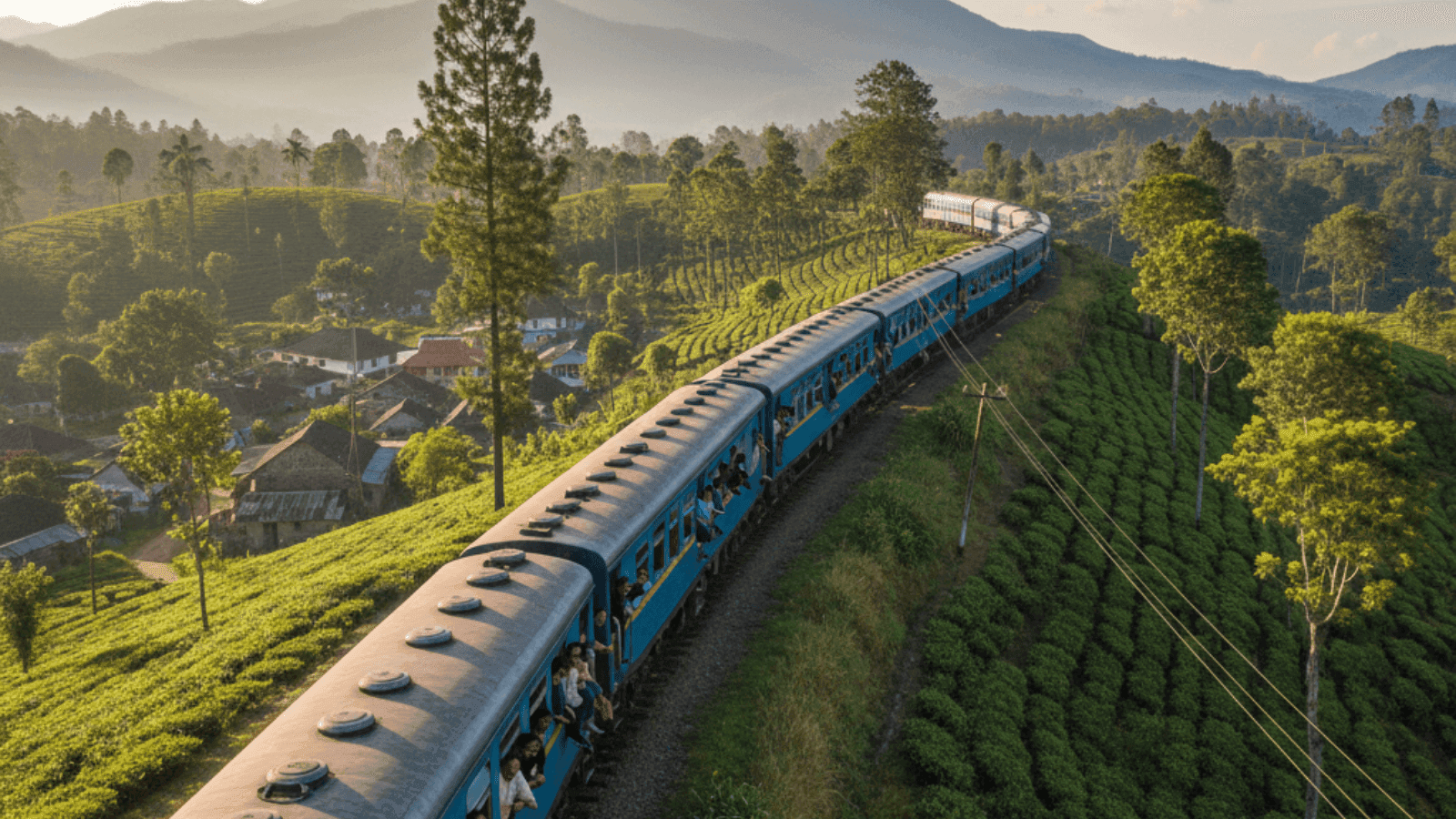
Rail lines were laid during the colonial era to move tea, not tourists, which is why they run through valleys, estates, and mist-heavy highlands instead of skirting them. You pass through places that never appear on itineraries because there is no road wide enough to justify stopping.
Windows stay open. Doors stay open too. The country does not feel segmented when you travel this way.
Key Train Routes to Plan
Not all Sri Lankan train journeys deliver the same experience, and knowing which routes matter saves disappointment.
Colombo to Kandy
This route is practical rather than dramatic. It introduces the rhythm of Sri Lankan rail travel: vendors hopping on at stations, families sharing food, commuters claiming the same seats every day. Hills begin to rise after Rambukkana, but this leg is about orientation, not spectacle.
Kandy to Ella (via Nuwara Eliya / Nanu Oya)
This is the stretch people talk about for good reason. The train crawls through tea estates, crosses old stone bridges, and threads cloud pockets without hurry. Visibility changes every few minutes. Sometimes you see everything. Sometimes nothing. Seats matter less than patience here. The real value is staying present instead of chasing the perfect photo.
Ella to Badulla
Short, often skipped, and quieter. This section feels local in a way the longer scenic routes no longer do. Fewer visitors, more routine travel. It is useful if you want the train experience without the crowd pressure.
Coastal Line: Colombo to Galle or Matara
The ocean runs so close to the tracks that waves sometimes spray the windows. This route works best in the early morning or late afternoon when the heat settles. It is also one of the easiest routes to use without advance planning.

Seat Classes, Reservations, and What Actually Matters
First-class observation cars sound appealing but remove you from the openness that makes these journeys memorable. Windows often do not open, and air-conditioning dulls the sensory experience.
Second class offers a balance. Open windows, assigned seats if reserved, and enough space to manage longer rides. Third class is crowded but honest. If you travel light and stay flexible, it is rarely uncomfortable for long stretches.
Reservations are essential on the Kandy–Ella line during peak season. Elsewhere, showing up early and boarding calmly works fine. Station staff are usually helpful if you ask directly and simply.
Luggage Logic for Train Travel
Large suitcases turn into social obstacles on Sri Lankan trains. A backpack or compact roller that fits between seats or overhead keeps everyone cooperative.
Stations are busy but not chaotic. Porters are available and affordable, especially at Colombo Fort and Kandy. Use them if your bag slows you down; platforms can change at the last minute. There is no dedicated luggage carriage on most trains. Your bag stays with you, which is reassuring once you adjust to the rhythm.
Weather Windows that Change the Experience
Train travel changes character with the seasons. From January to March, hill country routes stay clear and bright. Tea estates look trimmed and geometric. Visibility is reliable. April and May bring heat and sudden showers. Trains still run smoothly, but afternoons feel heavier, especially on coastal lines. June to September sees mist and rain in the central highlands. Views come and go, which some travelers find frustrating and others unforgettable. Coastal routes remain sunny on the west while the east quiets down. October and November are unpredictable everywhere. Trains run on schedule, but scenery feels muted and stations quieter.
Food, Stops, and Time Perception
Meals do not interrupt train journeys; they blend into them. Vendors sell samosas, cut fruit, boiled corn, and tea through the windows at longer stops. Locals often share snacks without comment.
Stations are brief pauses, not transitions. Names flash past faster than you expect. You learn to accept that you are moving through places without claiming them.
Time stretches differently on trains here. Four hours does not feel like four hours when the landscape keeps changing at walking speed.
Why Slow Travel Fits Sri Lanka Specifically
Distances are small, but density is high. Villages, temples, estates, and forests overlap without clean borders. Trains acknowledge this overlap instead of slicing through it.
You hear languages shift between stops. Dress styles change subtly. School children get off in groups and disappear down dirt paths. Nothing is curated. That is the point.
What Trains Quietly Remove from the Trip
They remove constant decision-making. No negotiating fares. No route anxiety. No watching the clock every few minutes. Once onboard, the country moves at its own pace, and you move with it. People stop asking what comes next and start noticing where they are sitting. If you want to travel Sri Lanka at this unhurried pace, where stays feel as thoughtful as the journey, Neomaxer makes it simple.









