
A Slower Way to Experience Singapore Without Rushing
Day 1: Arrival, River Walks, and Letting Jet Lag Win
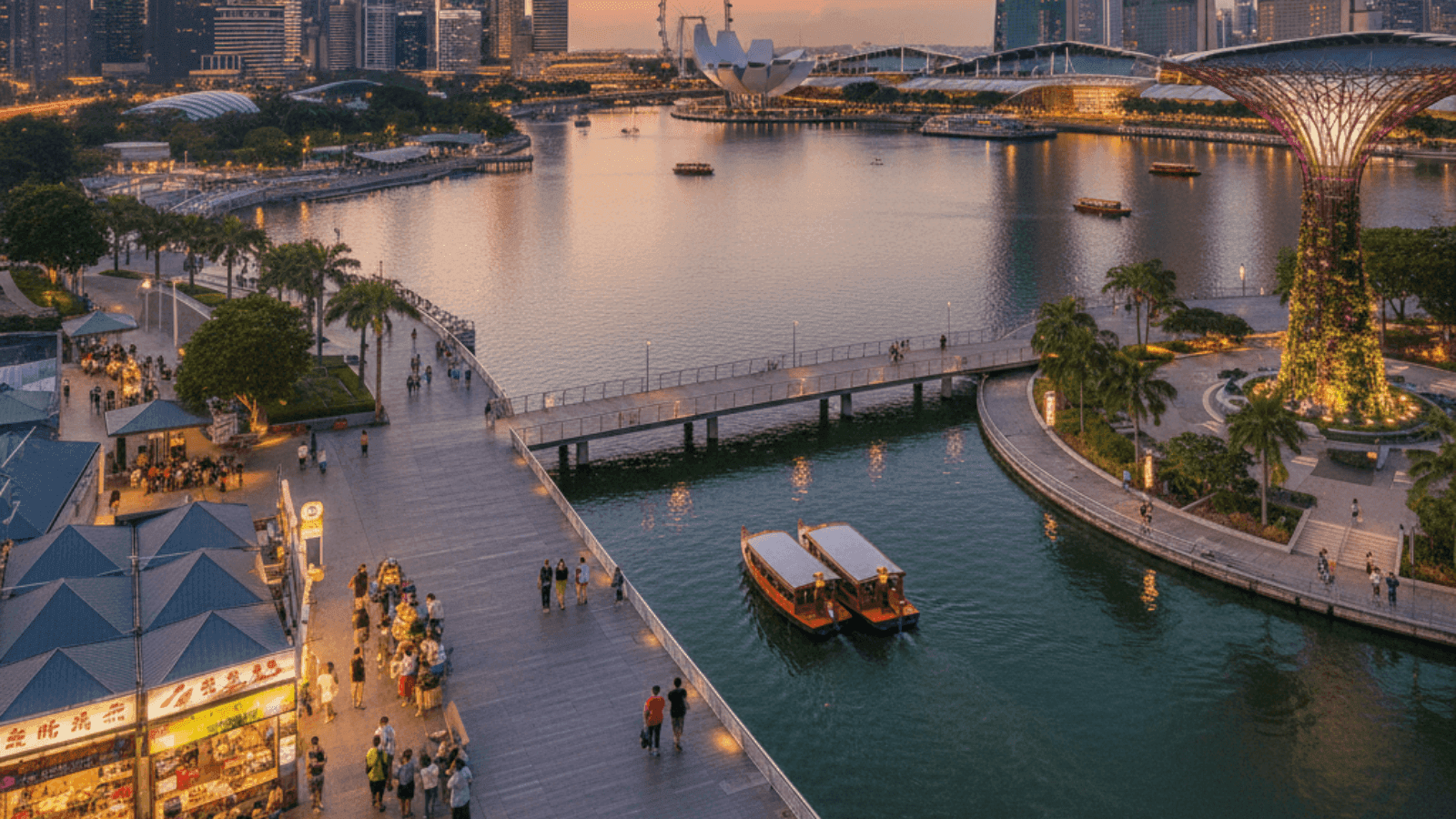
Keep the first day light, even if you land early. Singapore rewards alertness, not endurance. Base yourself near the Singapore River, Robertson Quay, or Clarke Quay, where walking is easy and evenings stretch gently. Walk the river at sunset, not for photos but to understand scale. The skyline looks dramatic, but the real lesson is how walkable the city feels once you stop planning every move.
Eat close to where you stay. Hawker centres like Hong Lim or smaller food courts nearby are enough. Go to bed early without guilt.
Day 2: The Day You Stay Mostly Around Marina Bay
Start late and choose one major museum only. The National Gallery works best if you stick to a single wing instead of both buildings. Sit when benches appear. Leave while still curious.
Walk to the Padang, then toward Marina Bay via the Helix Bridge. Skip timed attractions today. Gardens by the Bay looks best from outside during daylight, not as a checklist stop.
Dinner around Marina Bay is about space, not speed. Eat slowly, walk more than planned, and stop once the legs feel tired rather than when the map says you’re done.
Day 3: Little India and Kampong
Reach Little India mid-morning, after temple rush but before evening crowds. Walk Serangoon Road slowly, step into side streets, and stop for tea without purpose. Eat one proper meal here instead of sampling five things.
Move to Kampong Glam after lunch. The Sultan Mosque area shifts tone in the late afternoon. Textile shops, book stores, and quiet cafes make more sense when the heat dips. Stay until evening prayers finish, then eat nearby. Do not cross the city again at night. Stay in the area or head back.
Day 4: A Slower Outdoor Day
Singapore’s green spaces are designed for residents, not tourists. Choose one outdoor space only. East Coast Park works if you want sea air and cycling. MacRitchie works if you want forest shade and stillness. Do not try to do both.
At MacRitchie, skip the full loop unless you’re used to humidity. Walk partway, turn back, and sit near the water instead. At East Coast, rent a bike without a destination and stop when something feels comfortable.
Day 5: Neighborhood Singapore
This day explains the country better than any attraction. Pick one residential area: Tiong Bahru, Katong, or Bishan. Walk without marking spots. Eat breakfast, leave, return for lunch, leave again. Repetition is the point.
Bookshops, bakeries, and quiet cafes reveal how locals structure time. Neighborhood malls show daily life better than Orchard Road ever will.

If You Have a Full Week
Use extra days to revisit places rather than extend routes. Return to a hawker centre at a different time. Walk the same stretch of river in morning light. Go back to a cafe you liked. Singapore opens up on the second visit, not the first.
A seventh day works well for Sentosa if done slowly. Choose one beach, stay put, leave before exhaustion sets in.
What Not to Miss, Even When Moving Slowly
- Hawker meals outside peak lunch and dinner hours
- Evening walks along the river or coastline
- Museum galleries during quiet midday hours
- Residential neighborhoods in the morning
- Going back to one place you already liked
Packing for Slow Singapore Travel
- Breathable clothes you can walk in all day
- One light layer for aggressive air-conditioning
- Comfortable shoes or sandals you already trust
- A small bag for water, sunscreen, and daily essentials
Pacing Tips That Actually Work
Limit yourself to one MRT line per day when possible. Sit down every few hours even if you’re not tired. Eat meals where you can linger. Leave attractions earlier than planned. Singapore does not need to be conquered. It needs to be inhabited, briefly, and without urgency. If you want Singapore to feel calm, walkable, and easy to live in for a few days, where you stay makes all the difference. Neomaxer curates stays that suit slower travel, so your days feel settled.









