
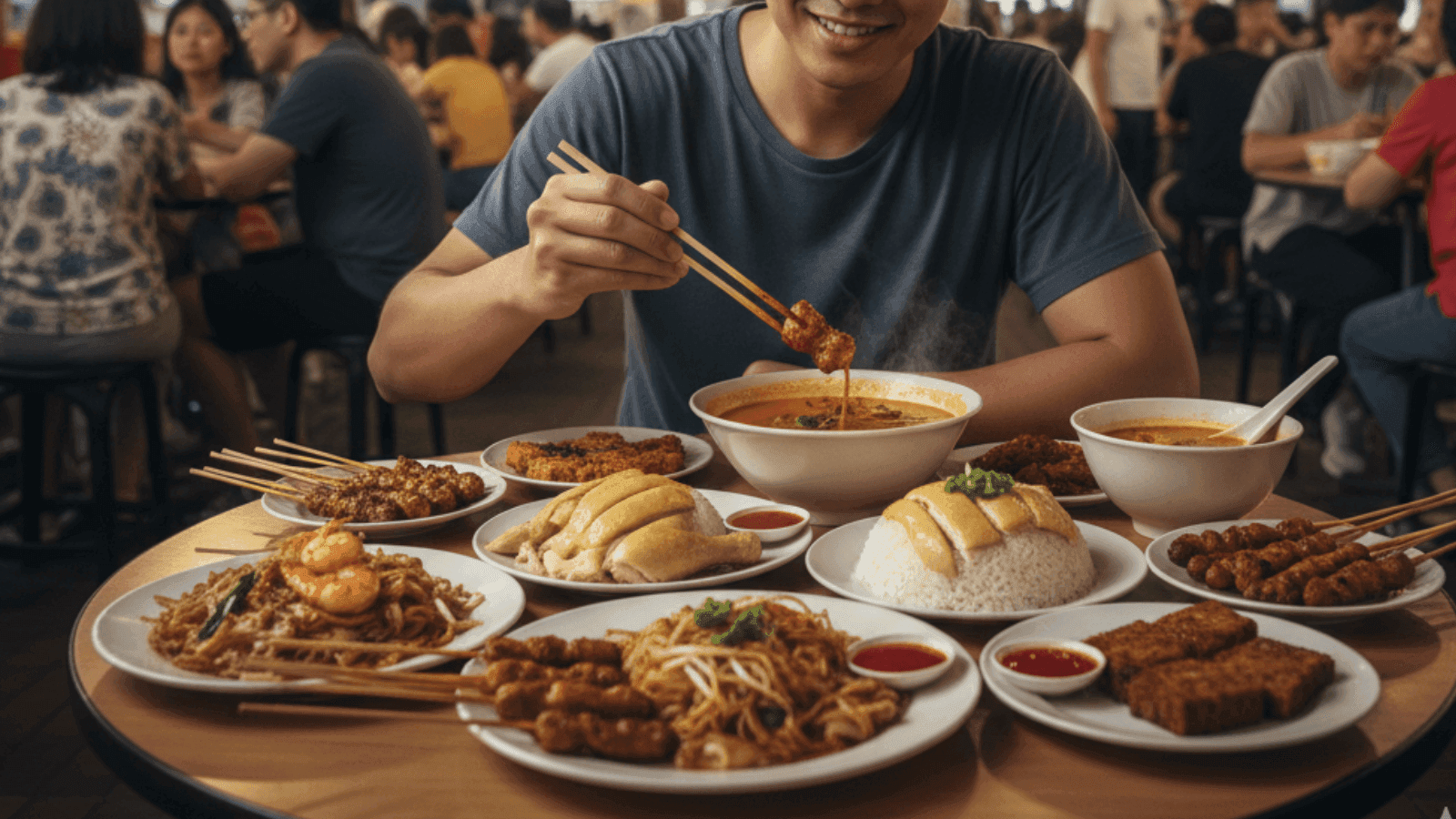
Singapore When You Step Outside the Malls and Follow the Food
Singapore only feels generic if you eat indoors. Once you start eating where the fans are louder than the conversations, the city sharpens fast.
Hawker Centres Are Where the Day Actually Starts
Morning queues form before signage matters. Office workers arrive early, retirees arrive earlier, and everyone knows exactly which stall they’re here for. Maxwell Food Centre fills up before noon because the roast meats don’t wait for latecomers. Old Airport Road feels confusing until you realise no one is browsing.
Seats are claimed with tissue packets, umbrellas, or nothing at all if the table looks obviously “mid-meal.” Orders are short. Payment is quick. Nobody explains anything unless you block the line.
Famous Dishes People Will Argue About
- Hainanese chicken rice - poached, not roasted, judged by the rice more than the chicken
- Laksa - coconut-heavy in Katong, spicier elsewhere, noodles often cut short on purpose
- Char kway teow - cooked fast, smoky, and better when the stall limits portions
- Bak kut teh - peppery, clear broth, refilled until you stop making eye contact
- Chilli crab - messy by design, eaten with hands even when cutlery is present
- Roti prata - plain first, fancy later, best eaten standing while it’s still tearing clean

Breakfast Happens Earlier Than You Think
Traditional coffee shops start winding down by mid-morning. Kaya toast disappears quietly. Soft-boiled eggs arrive already cracked, waiting for soy sauce and pepper. Coffee orders sound like code because they are.
Kopi means condensed milk. Kopi O means black Kopi C swaps condensed milk for evaporated milk. Say it wrong and no one corrects you. They just make something close enough.
Walk Until the Food Changes
Katong leans coconut and spice, shaped by Peranakan kitchens. Chinatown balances roast meats with herbal soups that smell medicinal but taste comforting. Little India runs late, loud, and generous with refills, especially when meals stretch into conversation.
Heartland areas like Toa Payoh or Ang Mo Kio don’t pause to translate menus. Photos thin out. English fades. Food stays consistent because the same people eat it every week.
Areas People Actually Go Back To for Food
- Chinatown Complex - sheer density, long waits, serious regulars
- Tiong Bahru - bakeries, wet market snacks, slow mornings
- Katong / Joo Chiat - laksa, kueh, old family-run shops
- Little India (Tekka area) - banana leaf meals, late-night sweets
- East Coast - seafood, cycling traffic, plastic chairs by the water
Weather Decides the Menu More Than Mood
Humidity pushes people toward soup and spice. Laksa, fish head curry, peppery broths that make sweating acceptable. Cold drinks come after the meal, not before.
Afternoon rain resets eating schedules. When the downpour stops, stalls reopen together. Fried snacks return first. Noodles follow. Desserts appear once the heat settles. Evenings belong to grills and smoke. Satay smells carry farther than signs ever could.
How to Tell a Stall Is Worth Waiting For
Hands move automatically. The cook doesn’t look up much. Orders aren’t written down. The pace is fast but never frantic. Queues form without chatter. Regulars don’t ask questions. When a stall sells out, the shutters come down without apology. Silence while cooking is usually a good sign.
Dessert Is Not a Finale Here
Cold sweets appear mid-afternoon. Chendol, ice kacang, grass jelly, all built to cool the body rather than impress a camera. Coconut milk shows up everywhere, quietly doing its job.
Bakeries mark neighbourhood loyalty. Pandan cakes, curry puffs, egg tarts. People cross streets for specific ovens, not brands. Fruit closes the night. Pineapple, mango, guava, often dusted with chilli without discussion.
Eating Alone Doesn’t Signal Anything
Solo diners are common. Small tables fill quickly. Eating alone usually means faster service. No one lingers over drinks. Sharing is optional. Portions assume one person. Ordering many dishes is normal. Packing leftovers is expected. Meals end when they end. Trays go back. Tables clear themselves through habit. If you want to eat your way through neighbourhoods without rushing back to generic hotels, Neomaxer helps you stay closer to the places where real meals happen.









