
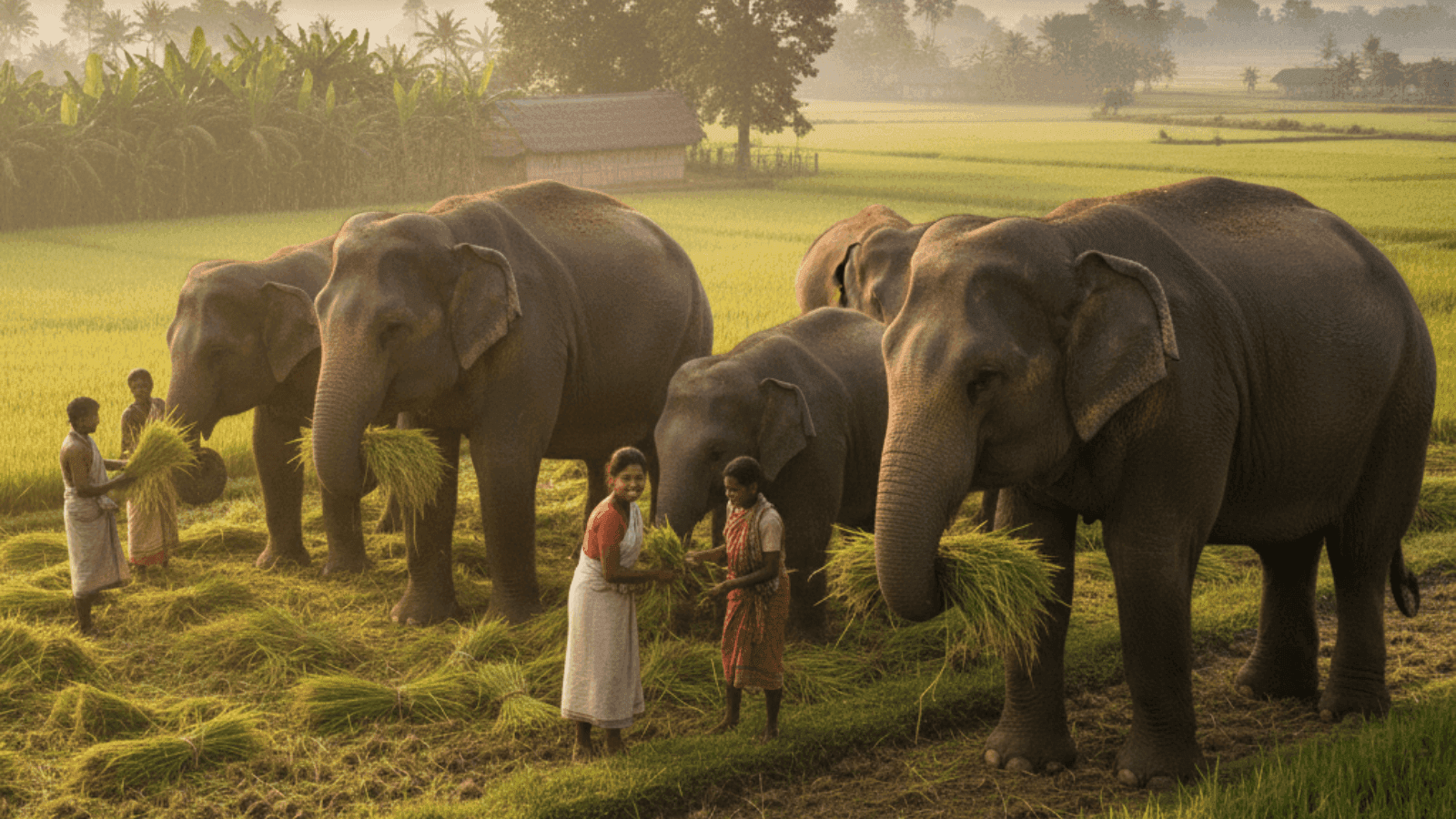
Panbari Village in Assam, Where Elephants Share the Harvest
A Beautiful Coexistence
Elephants walk straight into the fields here, and nobody runs. In the village of Panbari, in Assam’s Goalpara district, farmers leave parts of their crops untouched because they know elephants will come. Not to destroy, but to eat. Years ago, this same arrival meant shouting, fire, and fear. Now it’s expected.
The change did not happen overnight. Crop raids were frequent, and farmers lost months of work in a single night. But slowly, people began noticing patterns. Elephants followed the same paths. They returned to the same food sources. They were not random. They were predictable. So instead of fighting them, the village adjusted.
How Panbari Became Part of an Elephant Route
Panbari sits near forest patches connected to larger elephant corridors in western Assam. These corridors allow elephants to move between feeding and breeding grounds. The village happened to fall along one of these traditional routes.
This meant encounters were inevitable. Blocking the path only made elephants force their way through homes and fields. Leaving the path open reduced damage.
You can still see these routes today. They run quietly along field edges and tree lines, invisible unless someone points them out. For travellers, this is not a sanctuary or park. It is a working village where wildlife movement happens naturally.

What Daily Life Looks Like in This Village
Farming is the center of life here. Rice grows in wide, open plots. Banana trees stand scattered across farmland. Jackfruit trees grow near homes.
Some crops are planted knowing they will be eaten. Farmers harvest what they can, and leave the rest when elephants arrive. There is no attempt to chase them unless absolutely necessary for safety.
People talk about elephant visits the way others talk about rain. It is part of the rhythm here. You may hear stories of herds arriving late at night, feeding quietly, and leaving before sunrise.
When to Visit Panbari Village
The best time is between November and March. The weather stays cooler, and travel is easier. Fields are active, and elephant movement is more likely after harvest season when food sources shift.
Early mornings and evenings are when the village feels most alive. Mist sits low over the fields, and the forest edges feel close. Monsoon season makes access harder. Roads become muddy, and travel slows down.
What People Eat Here
Rice is served at every meal. It comes with lentils, boiled vegetables, and local greens. Mustard oil is used in most dishes. Banana stem and bamboo shoot preparations are common. Food depends on what grows nearby. Nothing feels imported or distant. Meals are simple, filling, and tied to the land.
How to Reach Panbari Village
- Reach Guwahati, the nearest major city
- Travel by road toward Goalpara district
- From Goalpara town, continue by local road transport
- The last stretch is rural and easier with local guidance
How to Travel Here Without Disturbing Village Life
- Do not try to get close to elephants
- Do not enter farmland without permission
- Avoid loud behavior or sudden movement
- Follow what locals advise about safe areas
- Treat the village as someone’s home, not a tourist spot
Why the Village Chose This Path
Elephants remember places where they find food. Chasing them only made them return more aggressively. Leaving space made their movement calmer and shorter. Villagers realized coexistence caused less damage than resistance. Over time, fear reduced. Understanding replaced reaction. Elephants still arrive. Fields still feed them. If places like Panbari change how you see travel, Neomaxer helps you stay closer to stories like this, not just the map.









