
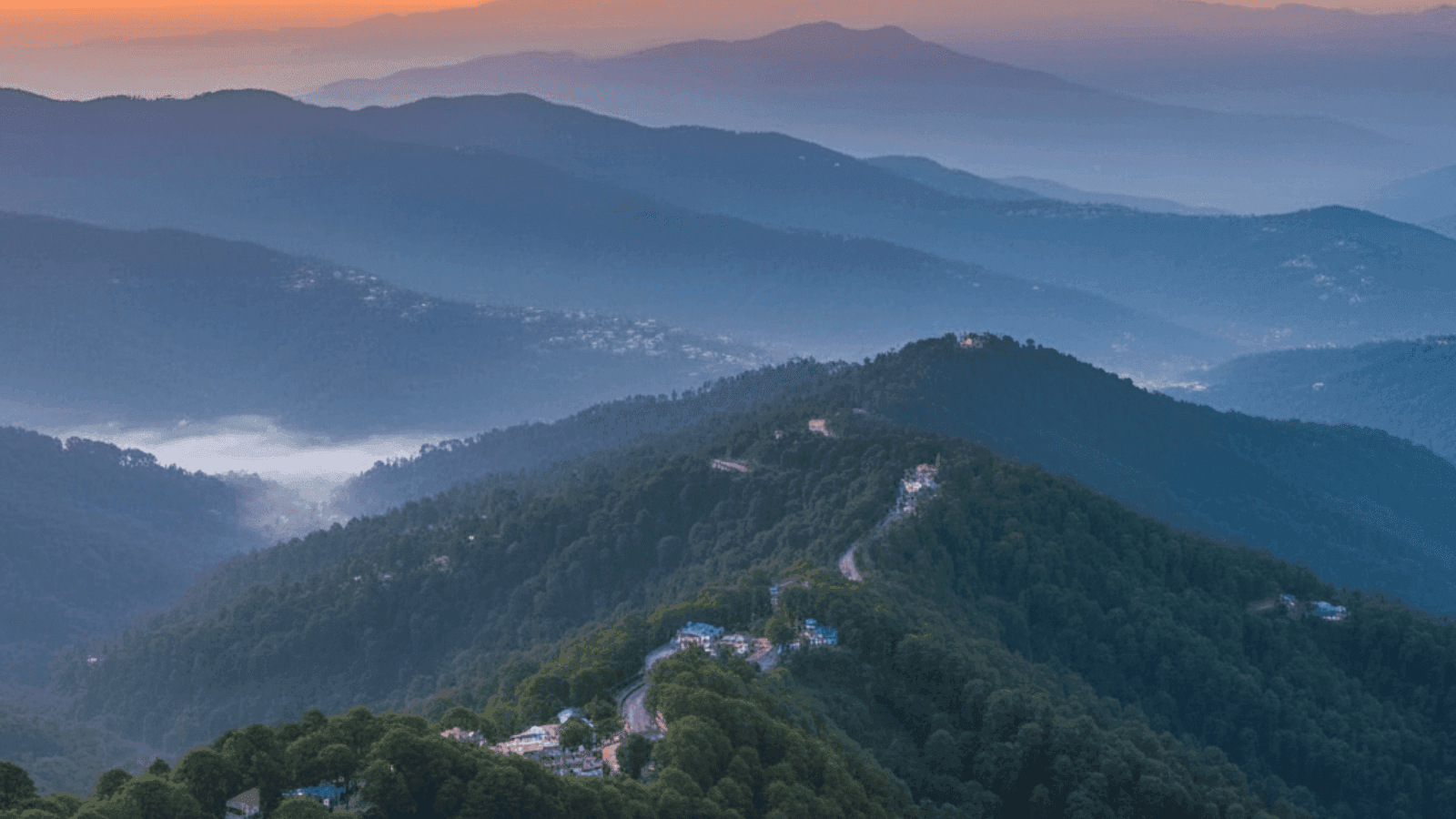
The Himalayan Hill Town That is Called the Queen of the Hills
Some hill towns feel like they were built for postcards. Mussoorie feels more like a long balcony over the Himalayas where people naturally slow down. One side opens to the plains, the other rises toward mountain ridges, and suddenly an afternoon walk turns into an hour of standing quietly and staring at the view.
Where is Mussoorie in the Himalayas
Mussoorie has carried the nickname “Queen of the Hills” for well over a century, and honestly, once you see where it sits, the name makes sense. Mussoorie is built along a mountain ridge about 2,000 meters above sea level, and it overlooks the valley around Dehradun. On a clear day you can see the plains stretching out endlessly in one direction and the hills fading into the distance in the other.
The town itself spreads across a few areas connected by winding roads. Mall Road is the busiest stretch where everyone eventually ends up walking, while nearby spots like Landour feel calmer and a bit more old-school.
Best Time to Visit
Most people come here between March and June, mainly to escape the summer heat in the plains. If you like clearer skies and fewer crowds, September to November is actually a great time. Winter changes the mood completely. From December to February the temperature drops quite a bit.
Sometimes close to freezing at night, and when snowfall happens the whole town suddenly fills up with visitors hoping to catch that rare white view.
Weather Range Through the Year
Mussoorie’s weather can shift more than people expect. Summer stays mild compared to most of northern India, though evenings still get cool enough that a light jacket feels nice.
Monsoon arrives around July and hangs around until early September. The rain comes in waves, sometimes bringing thick fog that rolls across the hills and hides the valley completely. Winters are quiet and crisp. Temperatures can drop to around 2°C at night, while daytime usually sits somewhere near 10°C.

How to Reach
Most travelers first reach Dehradun and then head up the hill from there. The city has a railway station connected to many major routes in North India, so trains are a common option. The nearest airport is Jolly Grant Airport, roughly an hour away by road. From either the airport or the railway station, taxis and buses climb the winding road up to Mussoorie.
The drive itself is actually part of the fun. As the road climbs higher, the air cools, the traffic noise fades, and suddenly the valley starts appearing below you.
How Many Days to Plan
Two days works if you just want a quick break in the hills. That gives enough time to walk along Mall Road, see a few viewpoints, and visit one or two nearby attractions.
But if the schedule allows, three or four days feels much better. That extra time means you can wander into quieter corners like Landour, catch a slow morning with mountain views, and not feel like you’re rushing through everything.
Places That Really Show What Mussoorie Is Like
- Kempty Falls
- Gun Hill
- Lal Tibba
- Camel’s Back Road
- Landour
Gun Hill is one of the most popular viewpoints and you can even take a ropeway up there. Lal Tibba sits higher and usually feels quieter, with wide views toward the distant Himalayan peaks.
Camel’s Back Road is simpler but surprisingly nice. It’s just a curved walking road where people come in the evening to stroll, watch the sky change color, and take their time.
Things Travelers Often Miss
A lot of visitors stay around Mall Road and leave thinking they’ve seen Mussoorie. The quieter side of the town is actually just a little further away.
Landour, for example, sits a bit higher and feels calmer almost immediately. The streets are narrower, the buildings older, and the pace noticeably slower.
Another good detour is Dhanaulti, about an hour away. It’s surrounded by forests and feels much less crowded, especially if Mussoorie itself is packed with tourists.
Practical Tips for Visiting
- Start exploring early in the day before traffic builds up.
- Carry a light jacket even in summer evenings.
- Weekends can get very crowded with visitors from nearby cities.
- Pre-book hotels during peak season.
- Walking is often faster than driving inside town.
Local Behavior and Expectations
Mussoorie has always been a holiday town, but locals still prefer things to stay fairly relaxed. Loud music late at night or noisy groups in quiet areas usually don’t go down well. You’ll also notice that mornings in the hills begin slowly. Tea stalls open first, shop shutters lift one by one, and the streets gradually come alive.
Planning Insights for a Smoother Trip
Where you stay can change the whole experience. Hotels slightly away from Mall Road usually feel quieter and often come with better valley views. Early mornings are easily the best time to walk around. The air feels clearer, the streets stay calm, and the mountain views look sharper before the crowds arrive.
Sunset spots, especially near Gun Hill, tend to get crowded though. Showing up a little early makes it much easier to actually enjoy the view.
Planning a trip to Mussoorie feels even better when the stay is just right. You can find comfortable and well-located places to stay through Neomaxer.









