
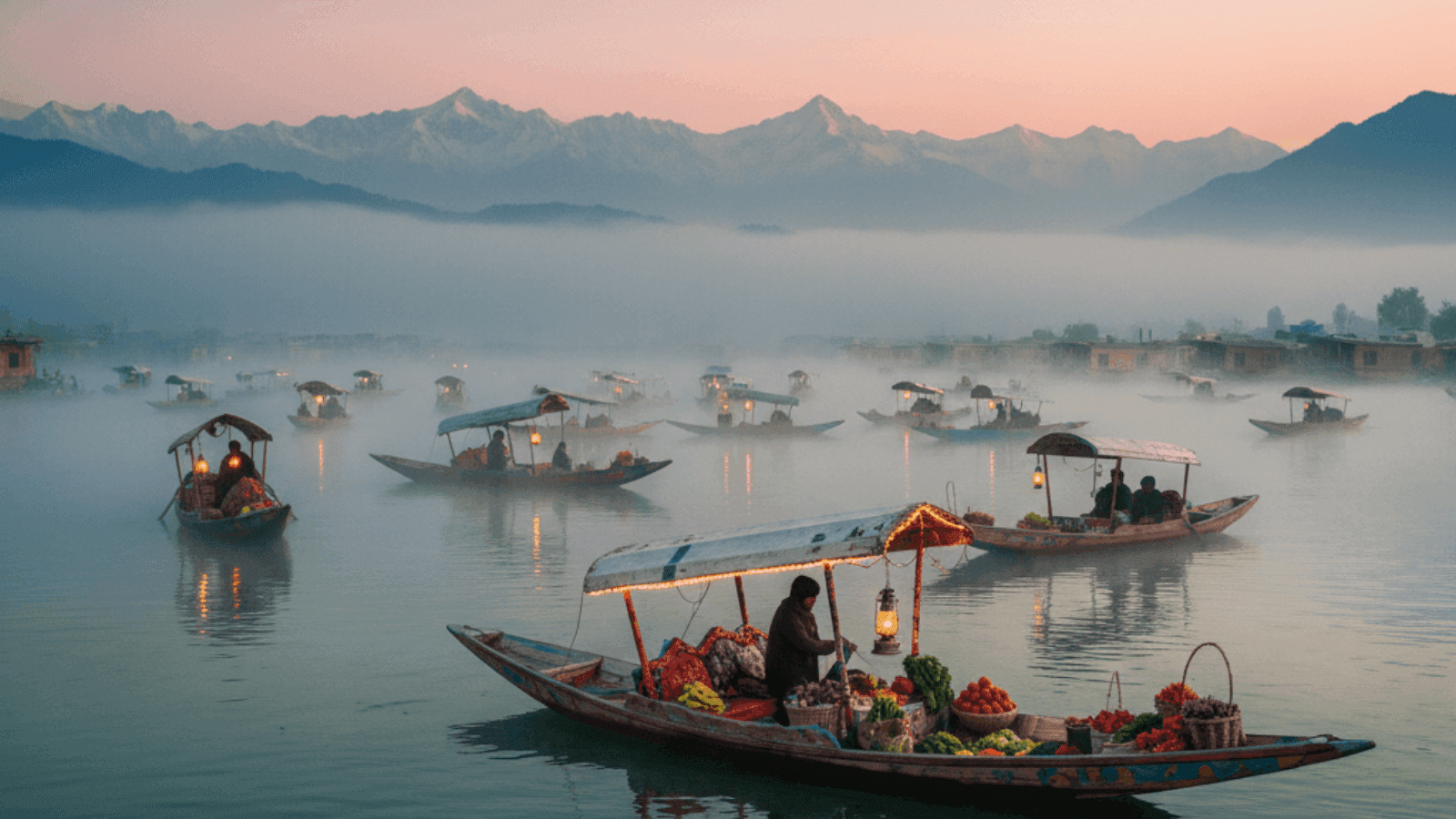
Dal Lake Floating Market: A Morning Trade on Water
What This Floating Market Actually Is
This is the floating vegetable market on Dal Lake in Srinagar, where local farmers sell fresh produce directly from wooden shikaras. Unlike tourist-facing lake rides later in the day, this market exists for trade, not spectacle. Vendors paddle in from nearby villages with vegetables stacked in neat piles, and buyers move between boats inspecting quality, quantity, and price.
There are no fixed stalls, no signboards, and no currency counters. Every transaction happens boat to boat, often decided in minutes.
Where It Takes Place on Dal Lake
The market operates in the interior sections of Dal Lake, away from the busy boulevard areas. It is usually set up near the canals that connect Dal Lake to surrounding wetlands and farming belts. These narrow waterways allow vegetable growers easy access without crossing the open lake.
Visitors staying on houseboats are often closer to the market than hotel guests on land.
Best Time to Visit the Floating Market
The market is active from around 5:00 AM to 7:00 AM, depending on the season. In summer, trading can start even earlier due to longer daylight hours. By 8:00 AM, most vendors have already sold their produce and begun paddling back.
Arriving after sunrise means missing the busiest moments, when dozens of boats cluster together and prices are still being negotiated.

What You Will See at the Market
Vegetables dominate the scene. Common produce includes bottle gourd, cucumbers, tomatoes, spinach, radishes, turnips, lotus stems, and local greens. Some boats carry flowers, water chestnuts, or handpicked herbs.
Produce is arranged openly, without packaging. Buyers inspect by touch, smell, and sight, often lifting vegetables to check freshness before making an offer.
How Bargaining Works on the Water
Prices are negotiated verbally, sometimes with quick hand gestures. There are no written rates. A buyer may move between several boats to compare quality and cost before returning to one seller.
The bargaining is fast and familiar. Most participants trade with the same people regularly, so discussions are efficient rather than aggressive. Visitors watching quietly are usually tolerated, as long as they do not interrupt negotiations.
Can Visitors Participate or Photograph
Visitors are allowed to observe and photograph, but participation in buying is uncommon unless accompanied by a local. Photography should be done discreetly, without blocking boats or asking vendors to pose.
Some vendors may refuse photos, especially during peak trading minutes. A respectful nod or brief request goes a long way.
Temperature and Weather Conditions at Dawn
Early mornings in Srinagar can be cold, even in summer. From May to September, temperatures at dawn often range between 10°C and 18°C. In spring and autumn, it can drop lower, especially over water. Winter markets are rare due to freezing conditions, and Dal Lake may partially ice over.
How to Reach the Floating Market
The only way to reach the market is by shikara. Houseboat hosts can arrange a departure before dawn, or local boatmen can be hired the previous evening with a fixed pickup time.
Motorboats are not used in this area during market hours. Silent paddling is part of how the market functions without disruption.
What to Wear and Carry
Warm layers are essential, regardless of season. Waterproof footwear is useful, as boats may have damp surfaces. Carry minimal gear to keep balance steady inside the shikara. Cash, phones, and cameras should be secured in waterproof pouches.
Local Etiquette to Keep in Mind
Avoid loud conversations. Do not attempt to steer the boat or move closer to vendors without the boatman’s guidance. Refrain from using flash photography in low light.
How This Market Fits Into Daily Life in Srinagar
For many families, this market is the primary source of income. Vegetables sold here often reach city markets later the same morning. The system cuts out middle layers, keeping prices workable for both growers and buyers.
When the last boats disperse and the lake opens up again, the same water becomes a quiet route back to homes hidden among reeds and narrow channels.
If watching Srinagar wake up from a shikara feels like your kind of morning, where you stay matters just as much. Neomaxer makes it easy to book calm, well-located stays around Dal Lake so you can step into moments like this without rushing.









