
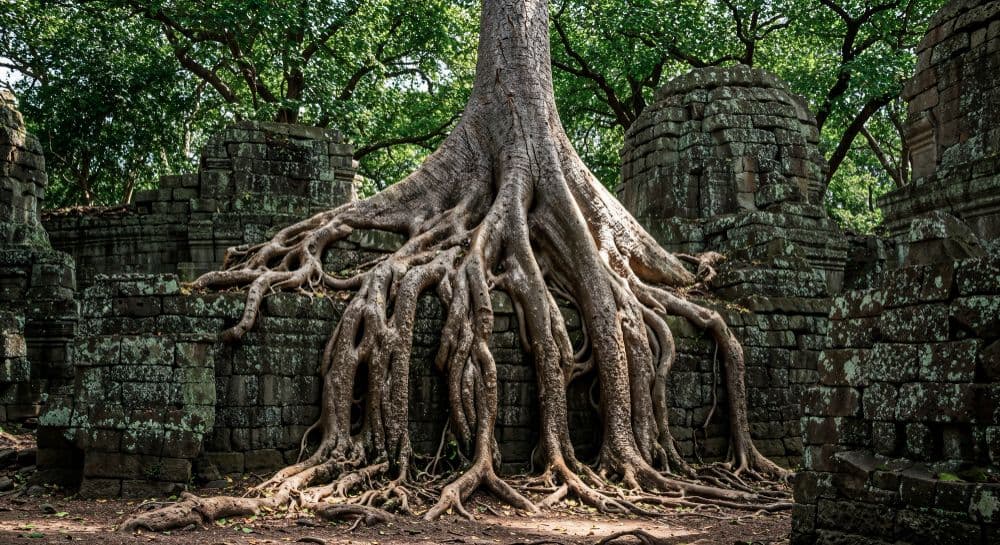
Khasi hills feel alive in a way stone mountains never do. Paths shift after rain. Roots thicken overnight. Streams carve new bends without warning. Locals say you should read these signs before you step forward, because the land listens and the land changes, especially in the valleys where living tree roots hold up the bridges you walk on.
Where Roots Grow Into Architecture
The first living root bridge does not look engineered. It looks grown, patient, shaped by hands that never try to overpower the forest. The Khasi people guide young aerial roots of the ficus tree across water, weaving them slowly until the roots accept the path and harden. This is where travellers stop and ask where the Khasi hills are located, and the answer always comes with a gesture instead of a sentence, as if the direction can only be felt.
These bridges cross streams that roar in monsoon and whisper in winter. Every crossing feels earned. Every step reminds you that this is not modern construction. This is a relationship. This is memory held in living wood.
Paths That Rely on Weather
Trails drop steeply, sometimes in hundreds of steps, and the forest shifts tone as you descend. A birdcall echoes longer. A patch of sunlight looks suspiciously still. A wet stone tells you rain passed moments ago. You move the way locals move, attentive and without rush.
Visitors searching for Khasi hills tourist places often expect viewpoints. They find something quieter instead. A root that has curled across the path. A stream that rose higher than expected. A sudden mist that hides everything but sound. The land decides the pace, and you follow.
Villages That Keep the Technique Alive
Nongriat, with its famous double-decker bridge, feels like walking into a craft workshop made of forest and water. Bridges here take decades to mature. Some take generations. Children learn to guide roots long before they learn written alphabets. They know which roots to pull gently and which to leave alone.
Khasi elders speak of bridges as part of family history. They remember drought years that slowed growth and heavy monsoons that sped it up. This is why the Khasi hills' history is found not in stones or inscriptions but in living structures that evolve each season.

Heights That Hold Their Own Winds
The highest peak of the Khasi hills rises with a mood that changes by the hour. Clouds brush past its slopes and disappear without sound. Wind tunnels through ridges unpredictably. On clear days, the valleys look close enough to touch. On misty days, even nearby trees seem distant.
Hikers ask khasi hills in which state out of habit, but the answer, Meghalaya, feels too small for a place that operates with such intent. The land does not perform for visitors. It simply continues, with or without anyone watching.
Waterfalls That Rewrite Trails
Near the bridges, waterfalls shift their strength depending on the season. In the monsoon, they roar so loudly that people communicate with hand gestures. In winter, they shrink into quiet trickles that leave exposed stones. Both versions alter the trail in subtle ways.
Trekkers learn quickly to check each foothold. A wet patch tells you water passed here only minutes ago. A dry curve tells you the sun reached it first. A mossy edge warns you to step closer inward. Locals do not explain these things. They assume the forest will teach you directly.
Forests That Respond to Footsteps
Some parts of the trail feel watched. A rustle followed by silence. A leaf falling too precisely. You look up expecting an animal, but often it is nothing more than the forest adjusting itself. This is why people approach the bridges lightly. They understand they are walking on something alive.
Even near Shillong, where the Khasi hills Shillong routes bring more travellers, the deeper trails remain unbothered by tourism. They carry their own rhythm. Villagers still pause before crossing certain streams, waiting for a signal only they seem to understand.
Bridges That Accept You Slowly
Standing on a living root bridge, you feel the structure respond. Not sway. Not bend. Simply respond. The roots feel firm but breathing, as if they remember every footstep taken over them. You realize this bridge will outlive everyone who walks on it.
Khasi hills hold this kind of age quietly, in roots shaped by patience and valleys shaped by rain, and if you feel the pull to see them for yourself, it makes sense to plan your journey early and even book your stay through Neomaxer while the forest decides what version of itself it will show you next.









