
Walking Through Bishnupur’s Terracotta Temples Without Rushing History
Rasmancha, Bishnupur’s Iconic Temple
Rasmancha stands out immediately. It doesn’t resemble the usual temple silhouette most travelers expect. Built in 1600 by Malla king Bir Hambir, the structure rises in wide tiers with rows of repeating arches that circle the building.
The design once had a practical purpose. During the Ras festival, idols from nearby temples were brought here so devotees could view them all in one place. Walking around the corridors now, the rhythm of arches and shadows becomes the main attraction. Most people admire the structure from a distance, but the slow walk around it is where the character really appears.
Best Time to Visit Bishnupur
Winter is easily the most comfortable season here. From November to February the weather stays mild, and walking between temples feels pleasant rather than exhausting.
Summer afternoons can feel heavy and humid, especially around the terracotta structures that hold heat. Early mornings still work well though. Monsoon months bring lush greenery around Bishnupur, but rain often slows down exploration.
How Many Days to Plan
Technically, Bishnupur’s main temples can be seen in a day. But the town doesn’t reward rushed itineraries. Two days feels far more satisfying. It allows time to wander through Rasmancha, Jor Bangla Temple, and Shyam Rai Temple without constantly checking the clock. There’s also space to visit small museums, browse local markets, and take quiet evening walks through temple lanes that most visitors overlook.
Planning Insights for Exploring the Temples
Most travelers arrive from Kolkata by train, a journey that usually takes three to four hours. Once in Bishnupur, the town itself is small enough to navigate easily.
Auto-rickshaws and cycle rickshaws wait near the station and temple areas, and hiring one for a few hours is common. That said, short walks between sites often reveal smaller shrines and unexpected views that vehicles simply pass by.
Entry to the main temple complex comes through a ticket issued by the Archaeological Survey of India. One pass covers several temples including Rasmancha, Jor Bangla, and Shyam Rai, which makes moving between them fairly straightforward.

Things Travelers Often Miss
Rasmancha draws the most attention, mainly because of its unusual architecture. Yet some of Bishnupur’s finest terracotta work sits quietly on temples that receive fewer visitors.
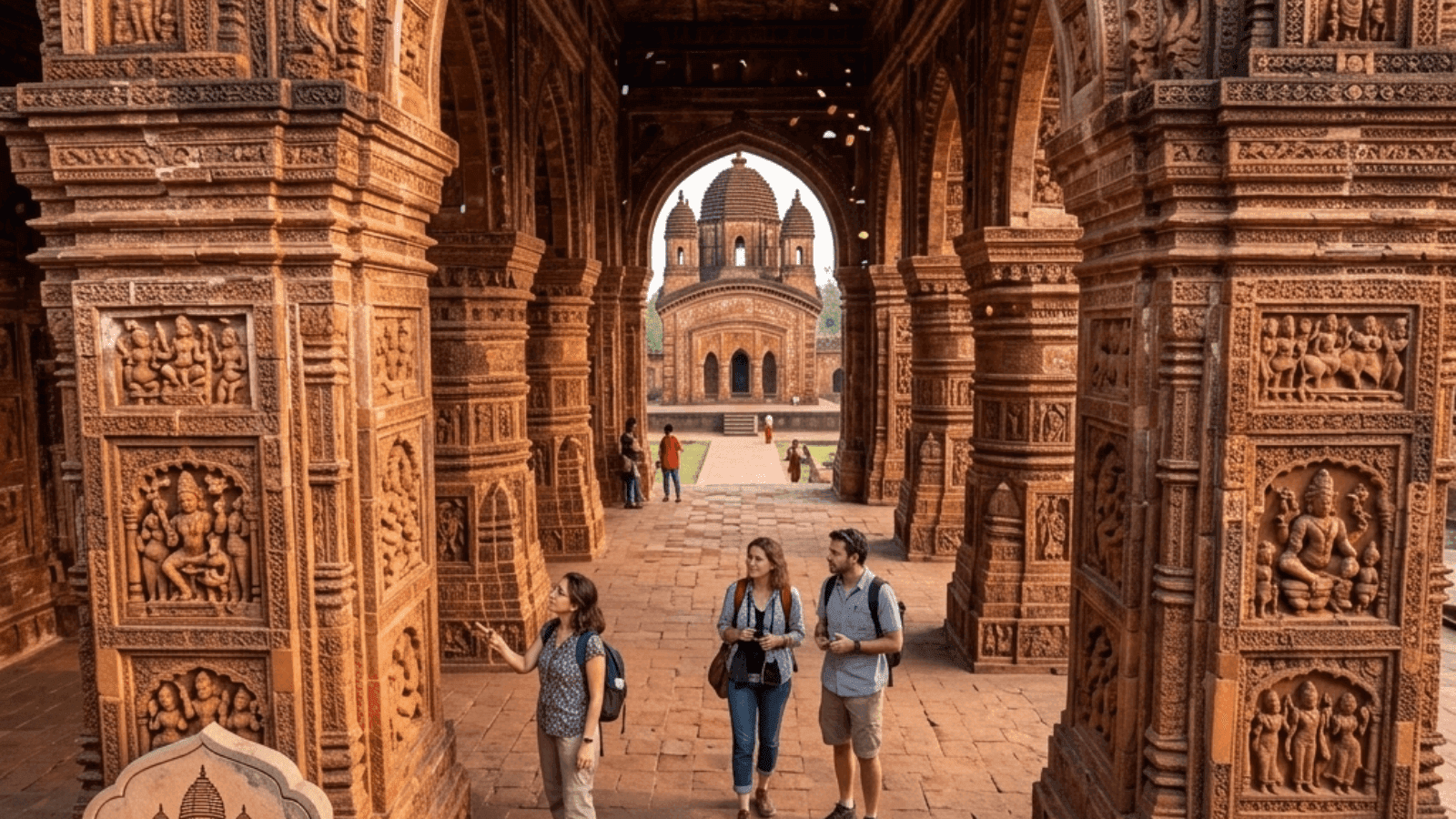
Jor Bangla Temple is one of them. Its roof resembles two traditional Bengali huts joined together, and the walls carry dense panels showing scenes from the Ramayana and Mahabharata alongside glimpses of everyday life - hunters, dancers, animals, musicians. The carvings reward anyone willing to slow down and really look.
The Dal Madol Cannon is another surprise. It stands near the temple area and dates back to the Malla era, linked to stories of defense against Maratha invasions.
Tips for Travellers
- Start temple visits early in the morning before larger groups arrive
- Carry water since shaded spots are limited
- Wear comfortable footwear for uneven paths
- Photography is usually allowed outside, but check signs before entering enclosed areas
- Local guides near temple gates often explain carvings visitors might miss
Local Behavior and Expectations
Bishnupur moves at a slower pace than most tourist towns. The temples remain important spaces for locals, not just historical monuments.
Visitors who treat the area quietly tend to receive warm responses. Loud conversations, climbing onto temple platforms, or leaning against terracotta walls usually draws quick warnings from caretakers. Morning hours often see local devotees visiting for prayer.
Conversations here are simple and friendly. Rickshaw drivers, shopkeepers, and small vendors often share bits of history if asked casually.
Terracotta at Jor Bangla & Shyam Rai
Some of the most intricate terracotta panels appear on the walls of Jor Bangla and Shyam Rai temples. Rather than scattered decorations, the carvings stretch across the walls like visual stories.
A closer look reveals small details that many visitors walk past - musicians playing instruments, horses in motion, warriors in curved helmets. The panels were shaped from local clay, fired carefully, then assembled across the temple surfaces like carefully arranged tiles.
Dos and Don’ts
- Do walk around the temples rather than viewing them only from the front
- Do spend time observing the terracotta panels closely
- Don’t touch or lean against the carved walls
- Don’t rush through the entire temple cluster in one quick loop
- Don’t expect large restaurants within the temple zone
Mistakes First-Time Visitors Make
A common mistake is treating Bishnupur as a quick stop on a larger West Bengal itinerary. Many travelers arrive in the afternoon, visit Rasmancha, take a few photos, and leave without seeing much else.
Another oversight is skipping the smaller temples beyond the central complex. Places like Madanmohan Temple or Radha Shyam Temple hold remarkable terracotta carvings but attract far fewer visitors. Some travelers also miss Bishnupur’s craft traditions. The town is known for Baluchari sarees, where silk weaving recreates mythological scenes in thread.
Want to stay close to places like Bishnupur and travel at your own pace? Neomaxer brings together thoughtfully chosen stays.









