









A visit to the International Mountain Museum in Pokhara offers an engaging introduction to the Himalayas, mountaineering history, mountain environments, and the diverse communities that live across Nepal’s high-altitude regions. Surrounded by views of the Annapurna range, the museum is an excellent place to understand the landscapes, people, and expeditions that have shaped the story of the world’s greatest mountains.
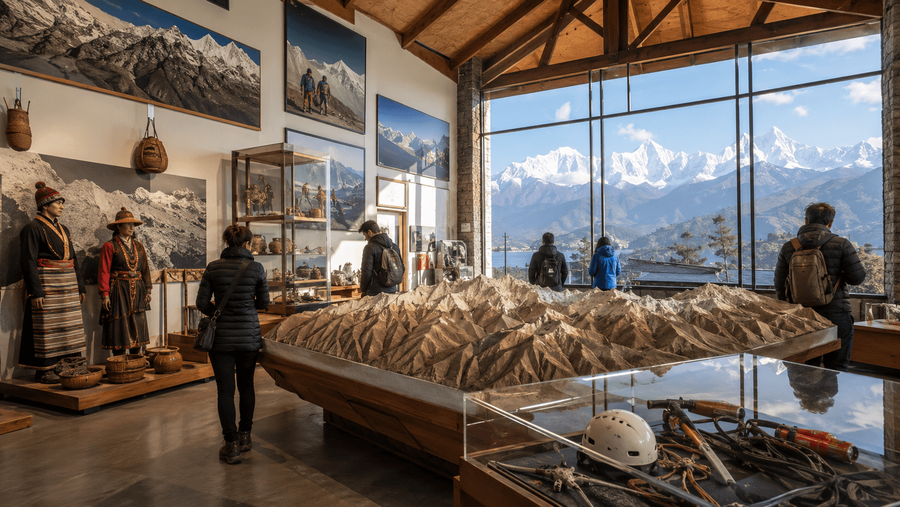
The museum’s exhibitions explore the geography and formation of the Himalayas, displaying maps, geological information, photographs, climbing equipment, traditional clothing, and historical records. Visitors can learn about famous Himalayan peaks, early mountaineering expeditions, climbing techniques, and the challenges faced by climbers in extreme weather and high-altitude conditions.
Another important section focuses on Nepal’s mountain communities, including Sherpa, Gurung, Thakali, and other ethnic groups connected to the Himalayan region. Traditional tools, household objects, cultural costumes, architectural models, and everyday items provide insight into local lifestyles, customs, festivals, livelihoods, and the close relationship between mountain communities and their natural surroundings.
Whether you are interested in trekking, Himalayan culture, mountaineering, geography, or Nepalese history, the International Mountain Museum provides a meaningful and educational experience. It is especially valuable before or after a trek, helping travelers better understand the mountains, people, and landscapes they encounter during their journey.
International Mountain Museum Highlights
- Learn about the geography and formation of the Himalayas
- Explore the history of Himalayan mountaineering
- See traditional climbing equipment and expedition gear
- Discover stories of famous mountaineers and expeditions
- Learn about Nepal’s major mountain peaks
- Understand the challenges of high-altitude climbing
- Explore exhibits about Sherpa and Himalayan communities
- View traditional clothing, tools, and household objects
- Learn about mountain cultures, festivals, and customs
- Discover the wildlife and ecosystems of the Himalayas
- See historical photographs and expedition records
- Explore displays related to trekking and climbing routes
- Understand the environmental importance of mountain regions
- Enjoy an educational experience for all age groups
- Admire views of the surrounding Annapurna mountains
Popular Things to Do Nearby
- Explore the museum’s mountaineering galleries
- Learn about historic Himalayan expeditions
- View traditional mountain community exhibits
- Photograph displays of climbing equipment
- Explore the geological section of the museum
- Learn about Himalayan flora and fauna
- Walk through the museum grounds
- Visit nearby cafés and restaurants
- Explore Pokhara’s Lakeside area
- Enjoy boating on Phewa Lake
- Visit Davis Falls
- Explore Gupteshwor Mahadev Cave
- Visit the World Peace Pagoda
- Experience the Pokhara Valley viewpoint areas
- Explore local handicraft shops
- Visit nearby Tibetan settlements
- Enjoy mountain photography
- Learn about Nepalese trekking routes
- Explore cultural attractions around Pokhara
- Combine the visit with other sightseeing experiences
Best Time to Visit the International Mountain Museum
- Morning for a relaxed and quieter visit
- Late afternoon for softer outdoor lighting
- Weekdays for fewer visitors
- Clear days for views of the Annapurna range
- Autumn for excellent mountain visibility
- Winter for crisp skies and peaceful surroundings
- Spring for pleasant weather and colorful landscapes
- Monsoon days as a useful indoor sightseeing activity
- Year-round as the museum remains suitable in every season
- Before trekking for useful cultural and geographical knowledge
Traveler Tips
- Allow 1.5 to 2 hours to explore the museum comfortably
- Read the exhibition descriptions for a better understanding
- Carry a camera for permitted photography areas
- Visit before a Himalayan trek to gain useful background knowledge
- Combine the museum with nearby Pokhara attractions
- Wear comfortable footwear for walking through the galleries
- Check opening hours before visiting
- Carry water, especially during warmer months
- Visit on a clear day for better mountain views
- Take time to explore the cultural exhibits
- Observe museum rules and avoid touching displays
- Keep children engaged with the mountain and wildlife sections
- Visit the outdoor grounds after exploring the galleries
- Learn about responsible trekking and mountain conservation
- Use the visit to understand local communities more respectfully
Why Visit the International Mountain Museum?
- One of Pokhara’s most informative cultural attractions
- Excellent introduction to Himalayan geography
- Detailed insight into mountaineering history
- Meaningful displays about Nepal’s mountain communities
- Suitable for trekkers, families, students, and history lovers
- Helps travelers understand the challenges of climbing
- Offers educational information about Himalayan ecosystems
- Displays traditional clothing, tools, and cultural objects
- Provides context before visiting mountain regions
- Easy to combine with other Pokhara attractions
- Interesting indoor activity during rainy weather
- Encourages respect for Himalayan cultures and environments
- Features stories of courage, exploration, and endurance
- Offers impressive mountain views from the surrounding grounds
- One of the best places to understand Nepal’s mountain heritage
Quick Facts
- The International Mountain Museum is located in Pokhara, Nepal
- The museum focuses on mountains, mountaineering, and mountain communities
- Exhibits include maps, photographs, expedition records, and climbing gear
- The museum introduces visitors to major Himalayan peaks
- Cultural galleries display traditional objects from mountain communities
- Exhibits explain high-altitude conditions and climbing challenges
- The museum includes information about Himalayan geology
- Visitors can learn about mountain wildlife and ecosystems
- Historic mountaineering expeditions are featured throughout the museum
- The museum is suitable for both adults and children
- It is a popular stop before or after trekking in the Annapurna region
- The surrounding area offers views of the Annapurna range
- The museum can be visited throughout the year
- Most travelers spend around 1.5 to 2 hours exploring
- A visit provides a deeper understanding of Nepal’s Himalayan identity