Must-visit places and experiences

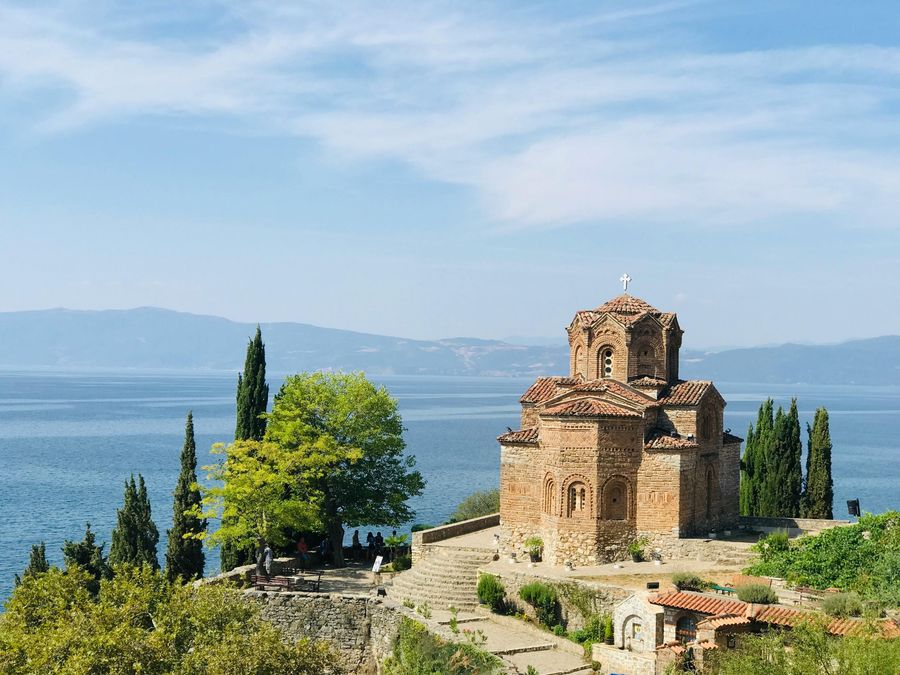
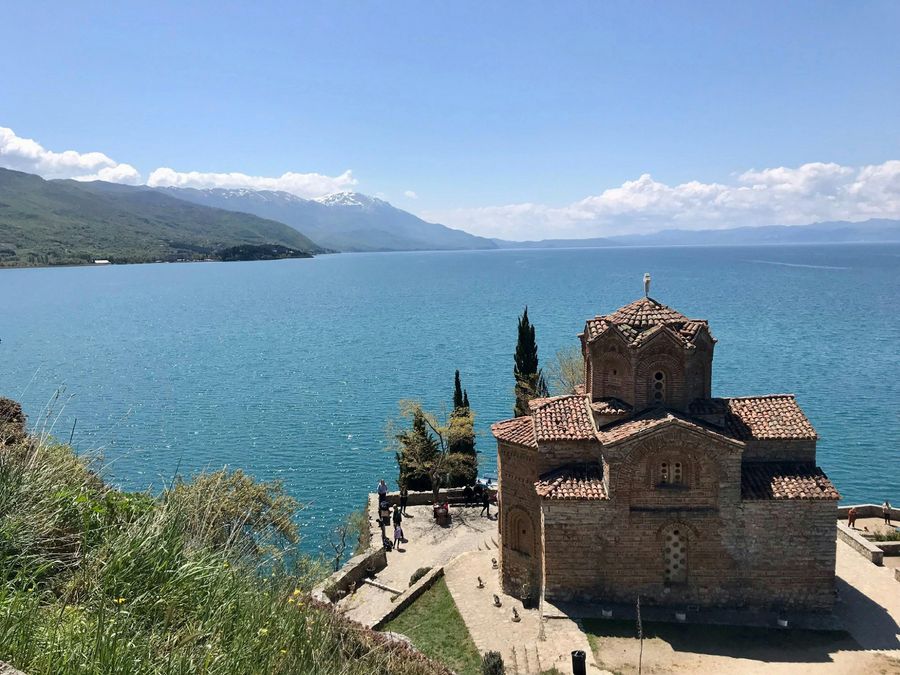
The Church of Sveti Jovan Kaneo is the most photographed landmark in North Macedonia, a small 13th-century Byzantine church set dramatically on a rocky bluff above Lake Ohrid. Its silhouette appears on postcards, banknotes, and travel guides, making it a defining image of Ohrid tourism. Built around 1280 and dedicated to John of Patmos, the church blends Armenian and Byzantine architectural styles in a compact cross-in-square design, with a distinctive stone-and-brick exterior laid in alternating bands. Inside, the original frescoes date back to the time of construction, though many were damaged over the centuries and later partially restored. The setting is what truly elevates it among the top attractions in Ohrid. Perched above the lake, the viewpoint offers a wide panorama stretching across the water to the Albanian mountains, creating one of the most memorable things to do in Ohrid, especially at sunset. The church is reached via a scenic 30-minute walk from the old town, passing through the Kaneo fishing hamlet. This peaceful approach adds to its appeal and makes it one of the most iconic places to visit in Ohrid for both photography and quiet reflection.

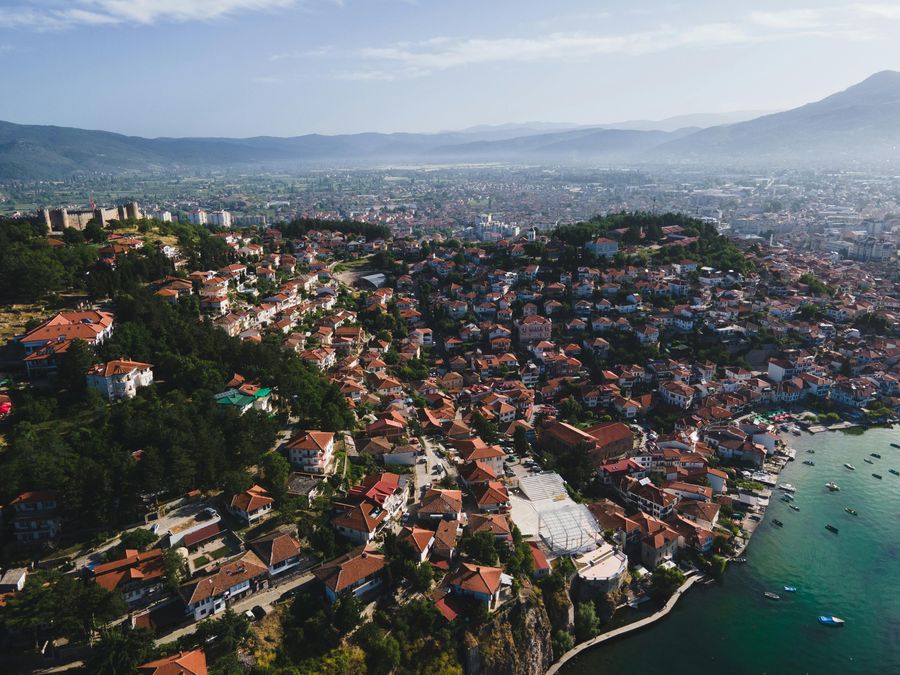
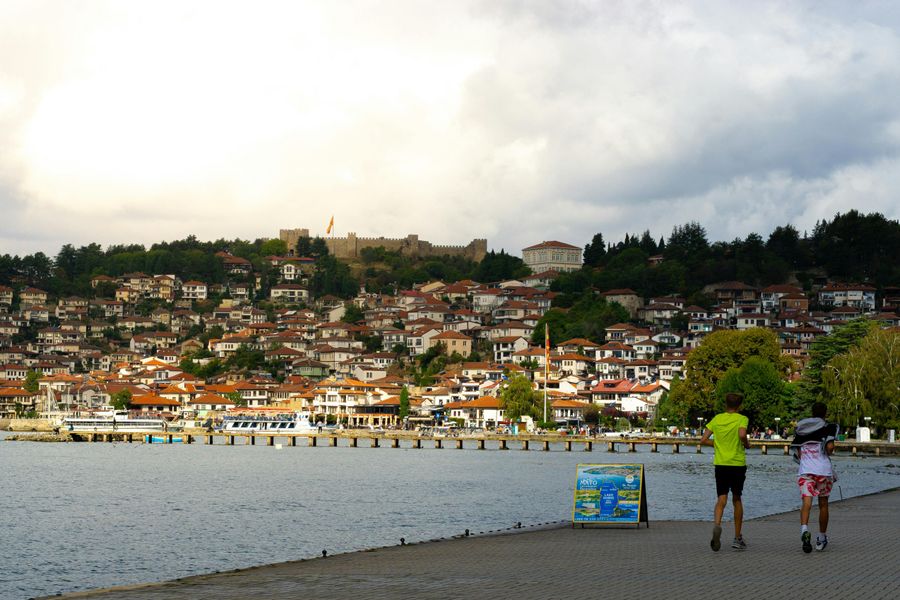
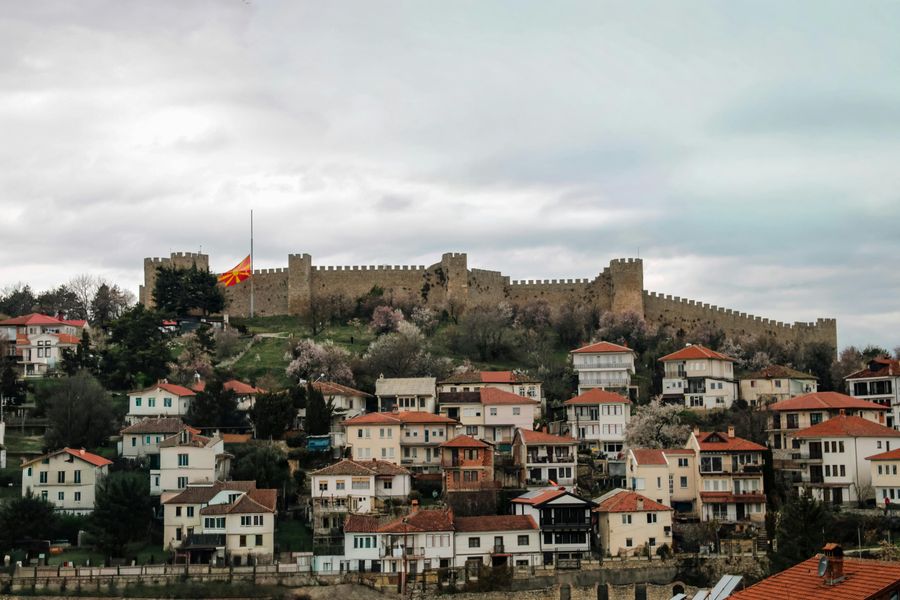
Samuel’s Fortress rises above the old town and is one of the most prominent places to visit in Ohrid, dating back to the 10th century. Originally a Byzantine stronghold, it was expanded by Tsar Samuel of the First Bulgarian Empire, who made Ohrid his capital between 990 and 1015. The fortress walls stretch for over 3 kilometers around the upper town, featuring 18 watchtowers, four gates, and the remains of a citadel at the highest point. Walking along the ramparts is one of the most rewarding things to do in Ohrid, offering sweeping views across Lake Ohrid, the tiled rooftops below, and the distant Galičica mountains, with the Albanian shoreline visible about 30 km south on clear days. These panoramic views make it one of the top attractions in Ohrid for both history and scenery. The fortress underwent major restoration between 2003 and 2008 after centuries of deterioration. While some aspects of the reconstruction are debated among archaeologists, the structure now closely reflects its medieval appearance, restoring its place as a defining landmark in Ohrid tourism.
Top activities and experiences


clear sky
Humidity
47%
Wind
1.74 m/s
Time zone
CET (UTC+1) / CEST (UTC+2)
Currency
MKD
Official languages
Macedonian
Best time to visit
MAY-SEP
Recommended trip duration
The best time to visit Ohrid is from May to September, when the weather is sunny (22–30°C) and the lake is warm enough for swimming, especially in July and August. The Ohrid Summer Festival, held from mid-July to mid-August, marks the cultural peak with performances in the ancient amphitheater and is a highlight of Ohrid tourism. From October to April, the town becomes much quieter, and many waterfront restaurants close, though it offers a more relaxed experience.
Indian passport holders require a North Macedonia visa, applied through the embassy. However, a 15-day visa-free stay is allowed if you hold a valid Schengen, US, UK, or Canadian visa. This is an important detail to check when planning to visit Ohrid.
Ohrid’s old town is compact and fully walkable, covering the area between the lake, the fortress, and Sveti Naum. Exploring on foot is one of the easiest things to do in Ohrid, as most key spots are close together. For longer distances, taxis are affordable (around 500 MKD within town), and public buses connect to attractions like Sveti Naum, making travel convenient across major places to visit in Ohrid.
Ohrid Airport (OHD) operates limited seasonal flights. Most travelers arrive via Skopje, about three hours away by bus or car, or from Tirana, Albania, which is roughly a 2.5-hour drive. These routes are commonly used in any Ohrid travel guide, especially for those planning a broader Balkan itinerary.
Join the discussion with real travelers. Ask questions, share insights, and get the most out of your next adventure.
3 days