









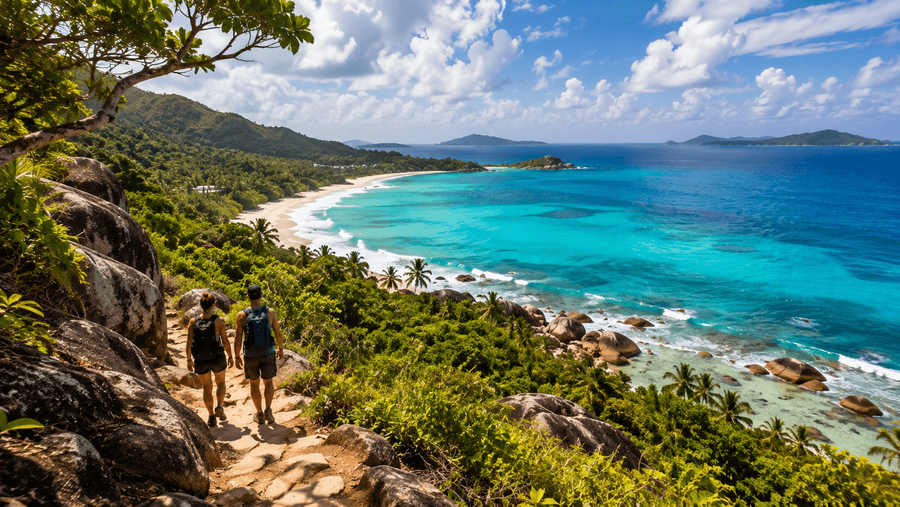
A guided or self-guided coastal trail from Grand Anse to Petite Anse and Anse Cocos offers travelers an active way to discover some of La Digue’s most dramatic and less-developed beaches. The route combines tropical forest paths, granite formations, coastal viewpoints, and quiet stretches of shoreline.
The experience usually begins at Grand Anse, a wide beach known for its powerful waves, open scenery, and impressive natural setting. Travelers can spend time walking along the shore, taking photographs, and preparing for the trail ahead. Swimming may be unsafe when currents are strong, so local signs and guidance should always be followed.
From Grand Anse, the trail continues toward Petite Anse through a natural path surrounded by tropical vegetation and granite rocks. Some sections may include slopes, exposed roots, sand, and uneven ground. Petite Anse offers a quieter atmosphere, beautiful coastal views, and a peaceful place to rest before continuing.
The final section leads toward Anse Cocos, a secluded beach reached through a longer forest and coastal trail. The route feels more adventurous and rewards travelers with dramatic scenery, fewer visitors, and a strong sense of escape.
A guided walk is ideal for travelers who want route assistance, local knowledge, and additional safety support. A self-guided experience offers more flexibility but requires careful preparation, suitable footwear, enough water, and awareness of changing weather and trail conditions.
The full experience can be adjusted according to fitness level, available time, and sea conditions. Travelers may complete only the Grand Anse to Petite Anse section or continue farther to Anse Cocos.
Coastal Trail Highlights
- Walk between three scenic beaches
- Explore Grand Anse, Petite Anse, and Anse Cocos
- Follow tropical forest and coastal paths
- See granite formations and panoramic ocean views
- Choose between a guided or self-guided experience
- Enjoy photography and peaceful beach stops
- Discover a quieter side of La Digue
Possible Route
- Begin at Grand Anse
- Walk along the wide shoreline
- Follow the marked trail toward Petite Anse
- Rest and enjoy the coastal scenery
- Continue through tropical vegetation toward Anse Cocos
- Spend time at the beach
- Return along the same route
- Adjust the trail according to weather and energy levels
Best Time to Visit
- Early mornings for cooler temperatures
- Dry days for safer and more comfortable walking
- April to May for generally pleasant outdoor conditions
- October to November for warm weather and scenic coastal views
- Avoid the hottest midday hours
- Begin early enough to complete the return journey before dark
Traveler Tips
- Carry enough drinking water for the complete walk
- Bring light snacks or energy bars
- Wear sturdy walking shoes with good grip
- Avoid walking the trail in unsuitable footwear
- Use sunscreen and wear a hat
- Carry insect repellent for forested sections
- Bring swimwear and a lightweight towel
- Protect phones and cameras from water and sand
- Check weather and sea conditions before starting
- Follow trail signs and established paths
- Avoid climbing wet or unstable rocks
- Take extra care after rainfall
- Do not swim where currents are strong
- Observe all beach warning signs
- Carry a basic first-aid kit
- Inform someone of your planned route if walking independently
- Keep enough energy and water for the return journey
- Do not continue if conditions become unsafe
- Leave beaches and trails free from waste
- Consider a local guide when unfamiliar with the route
Why Choose This Coastal Trail?
- Connects three of La Digue’s most beautiful beaches
- Combines walking, nature, photography, and coastal exploration
- Offers a more active alternative to a traditional beach visit
- Reveals quieter and less-developed areas of the island
- Can be adjusted according to fitness and available time
- Provides a choice between guided support and independent exploration
- Suitable for active couples, friends, and solo travelers
- Creates a rewarding sense of adventure
Quick Facts
- Grand Anse is usually the starting point
- Petite Anse is reached through a natural walking trail
- Anse Cocos requires additional walking
- The route includes sand, slopes, rocks, and forest paths
- Strong currents may affect swimming conditions
- Shade is limited in some sections
- A local guide can assist with navigation and safety
- The return journey should be planned before starting
- The complete experience may take approximately three to five hours
- Additional time may be needed for swimming, photography, and rest stops