










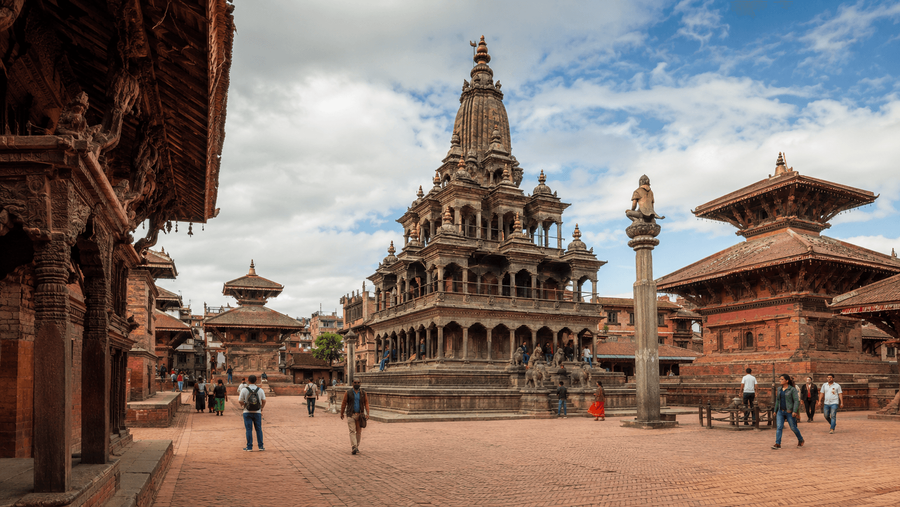
A visit to Patan Durbar Square offers a fascinating journey through Nepal’s artistic, architectural, and royal heritage. Located in the historic city of Lalitpur, south of central Kathmandu, the square is renowned for its beautifully preserved Newari architecture, intricately carved temples, traditional courtyards, stone sculptures, and former royal palace buildings. The entire area feels like an open-air museum where centuries of craftsmanship and cultural traditions remain part of everyday life.
The heart of the destination is Patan Durbar Square, a UNESCO-listed heritage area surrounded by pagoda-style temples, palace courtyards, shrines, statues, and historic brick buildings. Visitors can admire the magnificent Krishna Mandir, built entirely from stone and famous for its detailed carvings inspired by Hindu epics. Other notable landmarks include Bhimsen Temple, Vishwanath Temple, the Taleju temples, and the impressive statue of King Yoganarendra Malla.
The former royal palace complex contains several beautifully designed courtyards, including Mul Chowk, Sundari Chowk, and Keshav Narayan Chowk. These courtyards feature carved wooden windows, decorative doorways, stone fountains, religious sculptures, and traditional Newari design elements. One of the most remarkable attractions is the ancient Tusha Hiti, a sunken royal bath decorated with detailed stone carvings.
Travelers may also choose to visit the Patan Museum, located inside the restored royal palace. The museum displays an impressive collection of Hindu and Buddhist sculptures, religious artifacts, bronze statues, traditional artwork, and historical objects. Informative exhibits help visitors understand Nepal’s religious symbolism, artistic techniques, and cultural development.
Beyond the main square, travelers can explore narrow heritage streets, traditional metalworking shops, local cafés, Buddhist courtyards, and artisan workshops. Whether you are interested in history, architecture, spirituality, photography, or traditional craftsmanship, exploring Patan Durbar Square is one of the most rewarding cultural experiences in the Kathmandu Valley.
Patan Durbar Square Highlights
- Explore the historic Patan Durbar Square
- Admire traditional Newari palace architecture
- Visit the magnificent stone-built Krishna Mandir
- Explore ancient temples and religious shrines
- Walk through the former royal palace complex
- Discover Mul Chowk and Sundari Chowk
- See the beautifully carved Tusha Hiti royal bath
- Photograph intricate wooden windows and doorways
- Admire traditional stone and bronze sculptures
- Visit Bhimsen Temple and Vishwanath Temple
- See the statue of King Yoganarendra Malla
- Explore peaceful courtyards and narrow heritage streets
- Observe traditional metalworking and craftsmanship
- Experience authentic Newari culture
- Take an optional tour of the Patan Museum
Popular Things to Do Nearby
- Explore Patan Durbar Square
- Visit Krishna Mandir
- Walk through the royal palace courtyards
- Explore Mul Chowk
- Visit Sundari Chowk
- See the historic Tusha Hiti
- Take an optional tour of the Patan Museum
- Visit Bhimsen Temple
- Explore Vishwanath Temple
- Photograph traditional Newari architecture
- Walk through Mangal Bazaar
- Visit the Golden Temple
- Explore Mahabouddha Temple
- Discover traditional Buddhist courtyards
- Visit local metalworking workshops
- Shop for handmade statues and handicrafts
- Taste authentic Newari cuisine
- Relax at a rooftop café overlooking the square
- Capture architectural and street photography
- Learn about Patan’s royal and artistic heritage
Best Time to Visit Patan Durbar Square
- Early morning for peaceful courtyards and fewer visitors
- Late afternoon for warm golden photography light
- Spring for pleasant weather and clear skies
- Autumn for comfortable temperatures and excellent visibility
- Winter for cool weather and quieter sightseeing
- Weekdays for a more relaxed experience
- Festival periods for traditional ceremonies and cultural celebrations
- October to April for generally comfortable walking conditions
- Clear days for the best architectural photography
- Early evening for a relaxed walk through the surrounding heritage streets
Traveler Tips
- Start early to explore before larger crowds arrive
- Wear comfortable walking shoes for brick-paved streets
- Carry drinking water during warmer months
- Dress respectfully when entering temples and courtyards
- Keep some local currency for entrance fees and small purchases
- Ask permission before photographing local residents
- Allow at least three to five hours for a relaxed visit
- Spend additional time if visiting the Patan Museum
- Hire a local guide to understand the history and symbolism
- Carry sun protection during daytime sightseeing
- Be careful on uneven steps and stone pathways
- Respect areas that are restricted to worshippers
- Avoid disturbing religious ceremonies
- Support local artisans by purchasing handmade products
- Combine the visit with the Golden Temple and Mahabouddha Temple
Why Visit Patan Durbar Square?
- One of Nepal’s most important historic royal squares
- Outstanding collection of temples, courtyards, and palace buildings
- Exceptional examples of traditional Newari architecture
- Home to the iconic Krishna Mandir
- Rich traditions of metalwork, sculpture, and woodcarving
- Excellent destination for history and culture lovers
- Peaceful heritage atmosphere near central Kathmandu
- Impressive Hindu and Buddhist artistic influences
- Incredible opportunities for architectural photography
- Optional access to the informative Patan Museum
- Easy to explore as a half-day or full-day trip
- One of the Kathmandu Valley’s most memorable cultural experiences
Quick Facts
- Patan is located south of central Kathmandu
- The city is officially known as Lalitpur
- Patan is one of the three historic royal cities of the Kathmandu Valley
- Patan Durbar Square is part of a UNESCO World Heritage Site
- The square was once the royal center of the Malla kings of Lalitpur
- Krishna Mandir is built primarily from carved stone
- The royal palace complex contains several historic courtyards
- Mul Chowk was used for important religious ceremonies
- Sundari Chowk contains the intricately carved Tusha Hiti
- The Patan Museum is located inside the restored royal palace
- The museum displays Hindu and Buddhist sculptures and artifacts
- Patan is especially famous for bronze casting and metal craftsmanship
- Most attractions around the square can be explored on foot
- The destination is suitable for couples, families, and solo travelers
- A visit to Patan Durbar Square usually takes three to six hours