







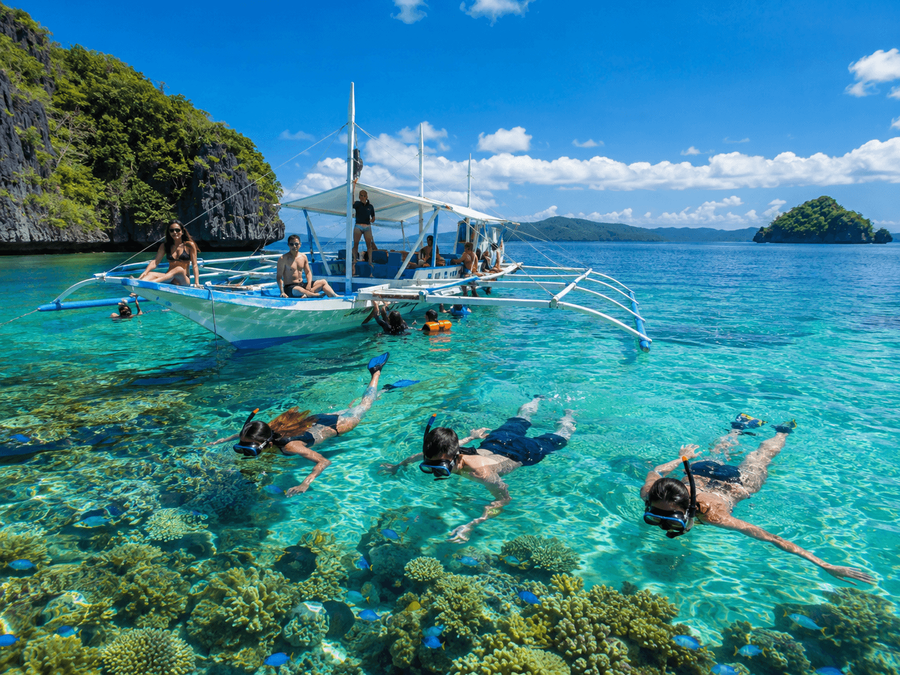
Climbing aboard a traditional outrigger bangka boat for an island-hopping tour reveals a completely different side of Boracay beyond its famous beaches. The boat engines roar to life, cutting through turquoise waters toward hidden snorkeling spots where vibrant coral gardens teem with tropical fish. Crystal Cove Island features dramatic limestone formations and secret lagoons accessible only by boat, while Crocodile Island's coral walls drop dramatically into deeper blue waters.
What makes it fascinating is the sheer diversity packed into a few hours—you'll snorkel alongside schools of colorful parrotfish, explore mysterious cave openings carved into cliff faces, and drift over coral gardens in water so clear you can see every detail from the surface. The boat captains know exactly where to find sea turtles, the best coral formations, and the calmest swimming spots.
One fun fact people love:
Crocodile Island gets its name from its shape when viewed from above, resembling a crocodile's head, but the real excitement comes from the healthy coral reef surrounding it that's home to clownfish, angelfish, and occasionally even sea turtles.
Where in Boracay is it?
Tours typically depart from White Beach Station 1 or Station 3, with boats heading to surrounding islands and snorkeling spots around Boracay's coastline.
How to reach:
Book tours through your hotel, beachfront tour operators, or directly with boat operators along White Beach; most offer morning and afternoon departures.
Best time to visit:
December to May during the dry amihan season when seas are calmest and visibility is best for snorkeling.
Best time of day:
Morning tours around 9:00 AM offer better visibility, fewer crowds at popular spots, and calmer waters before afternoon winds pick up.
Entry fee:
Island hopping tours typically cost PHP 1,200–2,000 per person depending on the itinerary and group size; Crystal Cove has an additional entrance fee of PHP 200.
Commute difficulty:
Easy to moderate; the boat rides can be bouncy in choppy conditions, and snorkeling requires basic swimming ability.
Things nobody tells you about this place:
- Bring your own snorkel gear if possible; rental equipment provided on tours is often poor quality with leaky masks and scratched lenses.
- Apply reef-safe sunscreen only; many tour operators now require this to protect the coral ecosystems, and regular sunscreen can get you refused entry to certain spots.
- The boats have absolutely no shade; bring a hat, rash guard, and plenty of water because you'll be exposed to intense tropical sun for hours.